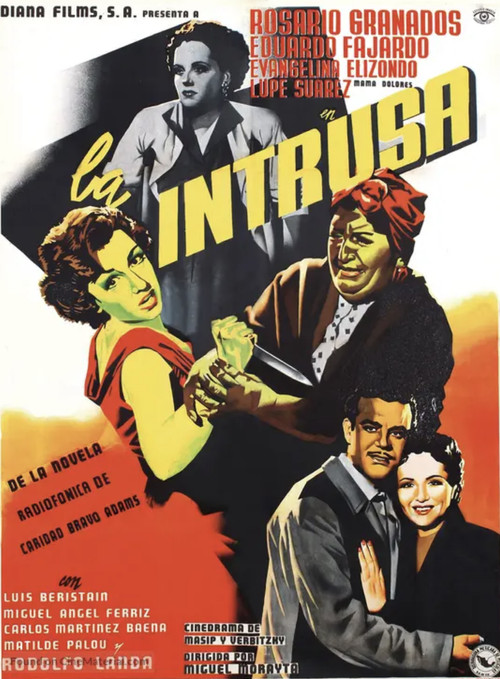
The Intruder
1954
No user ratings available yet
Representation score: 2.6 out of 10

Representation Score
Limited
1966
Director
Sergio Véjar
Runtime
95 minutes
Average Rating
No ratings yetNew Showbiz Analysis
This mid-century melodrama relies heavily on established genre clichés and conventional social structures. The plot revolves around romantic deceptions and tragic outcomes, adhering to a traditional worldview. The film lacks intentionality in challenging social hierarchies or providing multi-layered character studies. It remains anchored in the standard melodramatic structures of its time, focusing on secrets and domestic complications. While the Guatemalan setting offers a specific cultural backdrop, the narrative perspective seems centered on a Western tourist's experience, presenting a typical depiction of international travel and cultural encounter.
Category Breakdown
The film focuses on heterosexual relationships and traditional marriage issues. It does not include non-cisgender identities or critiques of heterosexuality.
The female protagonist is portrayed through clichés of mystery and domestic secrecy. She drives the plot but her influence is tied to romantic tragedy rather than social leadership.
Set in Guatemala, the film includes an encounter between a tourist and a local figure. It does not challenge colonial dynamics or feature a predominantly non-white cast.
The story uses the religious context of Holy Week to support a traditional moral framework. It serves more as a cautionary tale than a critique of religious institutions.
The narrative does not mention characters dealing with physical, sensory, or neurodivergent conditions.
Present on Screen
Limited or Absent
Official Synopsis
During a visit to Guatemala for Holy Week, tourist Andrés falls in love with a mysterious woman who hides her identity and marital status, rawing him into a web of secrets, deception and tragedy.
1954
1953

1966

1960

1958

1970

1969

1971
No reviews yet. Be the first to share your thoughts on this movie!
Use the rating form above to leave a star rating and optional review.