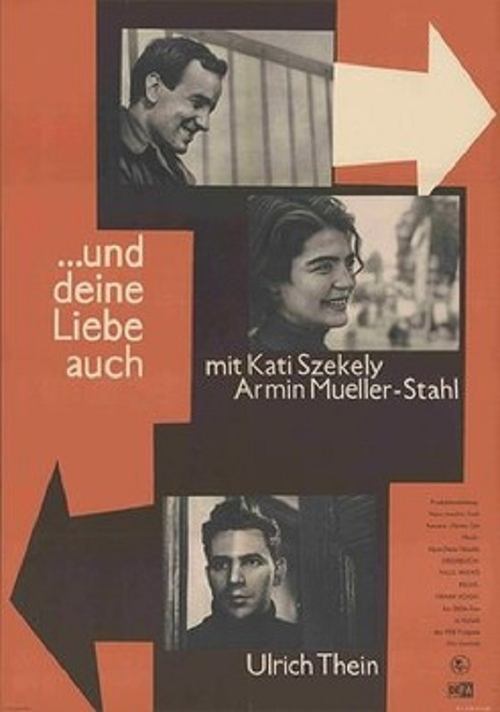
...And Your Love Too
1962
No user ratings available yet
Representation score: 4.7 out of 10

Representation Score
Fair
2021
Director
Ed Herzog
Runtime
96 minutes
Average Rating
No ratings yetNew Showbiz Analysis
3 ½ Hours is a high-stakes historical drama that uses a claustrophobic train journey to explore the human cost of the Berlin Wall's construction. Its narrative strength lies in challenging the perceived permanence of political institutions and emphasizing individual ability to act over state stability. While the film lacks demographic the way different parts of someone's identity overlap, this is a byproduct of its strict adherence to the historical realities of 1961 Germany. The focus remains on the sudden, life-altering instability caused by geopolitical shifts.
Category Breakdown
The film focuses on the immediate political and existential crisis of the passengers. There is no explicit evidence of LGBTQ+ identities or narratives that challenge the assumption that everyone is straight or cisgender.
Female characters have opportunities to demonstrate a significant role in driving the story during this life-altering crisis. The narrative likely balances traditional period roles with the necessity of women's ability to drive the story.
The cast reflects the demographic homogeneity of mid-century Germany. This lack of ethnic diversity is consistent with the historical accuracy of the 1961 setting.
The film critiques institutional power by framing the Wall as a force that separates families. It emphasizes individual morality over state-mandated structures and loyalty.
There is no specific evidence regarding the inclusion of characters with visible or invisible disabilities.
Present on Screen
Limited or Absent
Official Synopsis
August 13, 1961: The passengers on the interzonal train from Munich to East Berlin learn 3½ hours before crossing the border that the Wall is being built in Berlin. They have 3½ hours to make a life-changing decision: to get off the train or keep going.
1962
2001
2012

2018
2006

1988

2015
1981
No reviews yet. Be the first to share your thoughts on this movie!
Use the rating form above to leave a star rating and optional review.