
Belle al bar
1994
No user ratings available yet
Representation score: 5.6 out of 10
Representation Score
Limited
2000
RDirector
Alan Jacobs
Average Rating
No ratings yetNew Showbiz Analysis
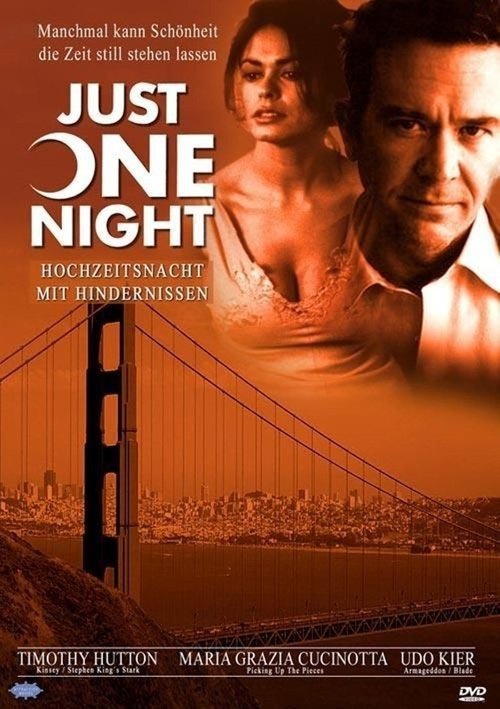
Just One Night functions as a conventional romantic comedy that adheres to the demographic and narrative standards of the year 2000. The plot relies on traditional structures centered around straight relationships, focusing on a man's search for a lost shoe and his interaction with a married woman. While the film offers a slight critique of domestic stability through its depiction of an unhappy marriage, it lacks the intentionality to disrupt social hierarchies. The representation remains largely homogeneous and follows established genre frameworks. Ultimately, the film provides little in the way of depth or diverse perspectives, serving instead as a standard genre piece of its era.
Category Breakdown
The story focuses on heterosexual romantic tension between a man and an unhappily married woman. It lacks non-straight identities or critiques of the assumption that everyone is straight.
The plot centers on a male protagonist's journey. While the female lead acts as a catalyst, the film does not explicitly challenge gender hierarchies or give real power to women.
The film appears to reflect the homogeneous demographic standards of early 2000s romantic comedies. There is no evidence of a non-Anglo-Saxon majority in the cast.
The narrative explores marital dissatisfaction and the disruption of wedding rituals. It operates within standard genre clichés without engaging in broader secularist or anti-Western critiques.
There is no evidence regarding the inclusion of characters with visible or invisible disabilities within the film.
Present on Screen
Limited or Absent
Official Synopsis
A man (Timothy Hutton) spends the night before his wedding searching for his lost shoe with the help of an unhappily married woman (Maria Grazia Cucinotta).
1994

2012

2002

2001

2002
1972
1996

1992
No reviews yet. Be the first to share your thoughts on this movie!
Use the rating form above to leave a star rating and optional review.