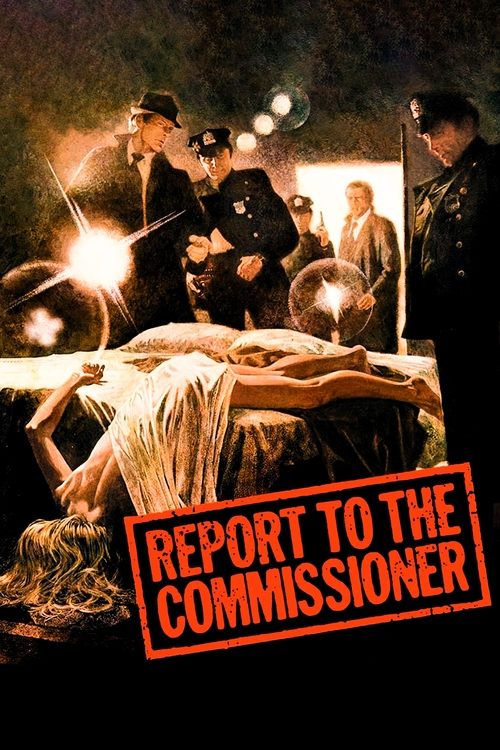
Report to the Commissioner
1975
No user ratings available yet
Diversity score: 3.0 out of 10

1983
Director
Patrick Le Bon
Runtime
90 minutes
Average Rating
No ratings yetSynopsis
An inspector of the Antwerp criminal investigation unit faces problems not only in his professional life, but also at home. When he is partnered with a young, over-confident colleague, he loses control over the case in hand.
Overall Score
Limited
Category Breakdown
LGBTQ+ Representation
The film lacks explicit queer visibility or non-cisnormative identities. It operates within a traditional dramatic framework that does not critique heteronormativity.
Gender Representation
The story centers on a male inspector and his male colleague. While female cast members are present, the plot focuses on masculine-centric professional and interpersonal friction.
Racial & Ethnic Diversity
The narrative is predominantly Eurocentric, reflecting the demographic norms of 1980s Antwerp. It offers limited intersectional breadth or non-Anglo-Saxon representation.
Religious & Cultural Diversity
This procedural drama functions as a standard character study. It lacks any overt critique of Western institutions or specific cultural agendas.
Disability Representation
There is no mention of characters navigating physical, neurodivergent, or mental health conditions within the narrative.
Strengths
Areas for Improvement
AI Analysis
Zaman follows a conventional crime-drama structure typical of early 1980s European cinema. The plot prioritizes established genre tropes, focusing on the professional and domestic struggles of a male inspector. The film lacks intentionality regarding the subversion of social hierarchies. It adheres to the demographic and narrative norms of its era, offering little in the way of intersectional or diverse perspectives. Ultimately, the film serves as a traditional character study rather than a vehicle for social critique or complex representation.
1975
1939

1962

1971

1978
1999

2013

2012

2002

1971
1989

2025
No reviews yet. Be the first to share your thoughts on this movie!
Use the rating form above to leave a star rating and optional review.