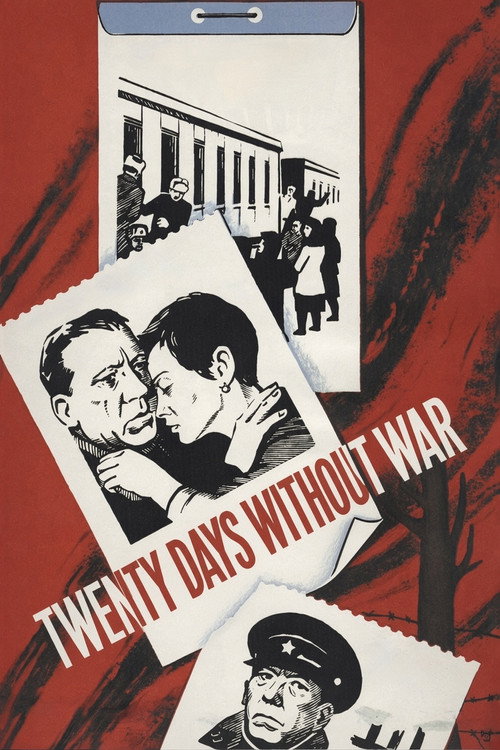
Twenty Days Without War
1976
No user ratings available yet
Representation score: 4.8 out of 10
Representation Score
Fair
1986
Director
Aleksei German
Runtime
96 minutes
Average Rating
No ratings yetNew Showbiz Analysis
Aleksei German’s film dismantles the conventional war epic by emphasizing psychological complexity over simplistic ideology. By focusing on a Nazi defector seeking redemption, the film steers clear of didactic socialist realism, offering a gritty, sensory-rich depiction of human survival. The film excels in presenting moral gray areas, moving away from the binary of good versus evil. This approach offers a sophisticated, non-dogmatic view of history that prioritizes subjective truth over state-sanctioned heroism. However, the film lacks modern markers of diversity. The narrative remains focused on male combatants and a homogeneous ethnic background, reflecting the specific historical context rather than a diverse contemporary perspective.
Category Breakdown
There are no LGBTQ+ characters or narratives in the film. The story centers on the survival and moral struggles of soldiers during wartime.
Male protagonists dominate the story within a male-dominated military environment. The film does not significantly challenge traditional gender roles.
The film portrays a culturally and ethnically homogeneous Soviet society. It presents a realistic and unidealized view of the population.
The film challenges traditional heroic war stories by exploring moral ambiguity. It uses the character of Lazarev to question the singular morality often found in patriotic dramas.
Specific disabilities are not highlighted, but the film's realistic portrayal suggests the physical and mental trauma of war is presented with gravity.
Present on Screen
Limited or Absent
Official Synopsis
Shot in 1971 but banned until 1986, this distinctly Russian war story takes place in 1942 behind enemy lines. A regiment of partisans captures former Red Army lieutenant Lazarev who is dressed in a German uniform. He’s a Nazi defector and collaborator but now desires to switch back and fight with Russian partisans.
1976
1959
1968

1977
1970

1984

1989
1981
No reviews yet. Be the first to share your thoughts on this movie!
Use the rating form above to leave a star rating and optional review.