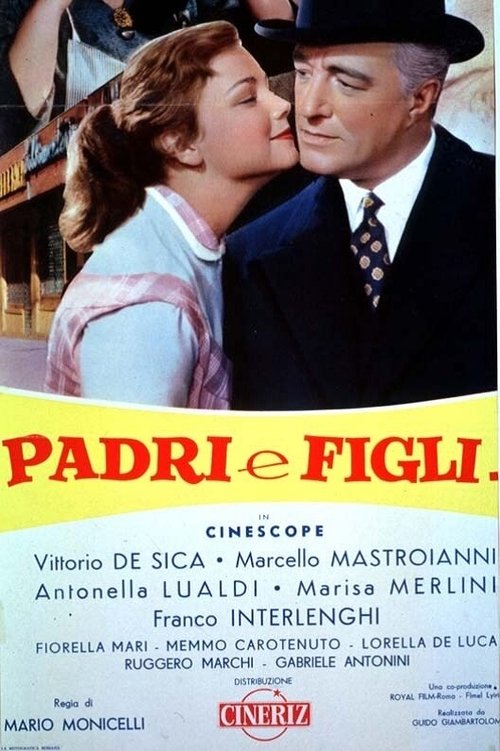
Fathers and Sons
1957
No user ratings available yet
Representation score: 0.9 out of 10
Representation Score
Fair
1968
Director
Dino Risi
Runtime
104 minutes
Average Rating
No ratings yetNew Showbiz Analysis
Dino Risi’s work employs satire to expose the hypocrisies of the Italian middle class. The film centers on the tension between personal desires and the rigid moral codes of the late 1960s. While the film provides a critique of social reputation and patriarchal structures, it remains limited by the demographic homogeneity of its era. It lacks modern characters who reflect more than one aspect of diversity, focusing instead on the social norms of its time. Representation of disability and gender is present but often serves the plot's mechanics rather than providing deep, independent character development. The film is a product of its specific temporal and geographic context.
Category Breakdown
The film does not include any explicitly LGBTQ+ characters or non-straight relationships. The story follows a conventional romantic storyline focused on a heterosexual couple.
Marisa faces social pressures and gossip about her morality, which drives the plot. Although she experiences conflict, her role is largely defined by the actions of the male protagonist.
Set in 1968 Italy, the film reflects the lack of racial diversity typical of that time. There is no indication of a diverse cast or non-European perspectives.
The story criticizes strict communal morality and patriarchal influence. It uses social gossip and family opposition to challenge the idealization of the traditional family unit.
A deaf and mute husband serves as a narrative obstacle to the central romance. This character functions more as a situational complication than a nuanced individual.
Present on Screen
Limited or Absent
Official Synopsis
When Marino goes to Rome for an event, he certainly does not imagine meeting Marisa, who will become the love of his life. But once love is found, it is a matter of spreading it and here the difficulties begin: first the father who opposes it; then, after the death of his father, the gossips who make Marino believe that Marisa was a little good, so much so that Marisa runs away. Repentant, Marino searches in vain and then, almost by accident, finds her again, Mrs. Ciceri. But love admits no obstacles, not even that of a deaf and dumb husband.
1957

1952
1968
1964
1984

1960

1959

1972
No reviews yet. Be the first to share your thoughts on this movie!
Use the rating form above to leave a star rating and optional review.