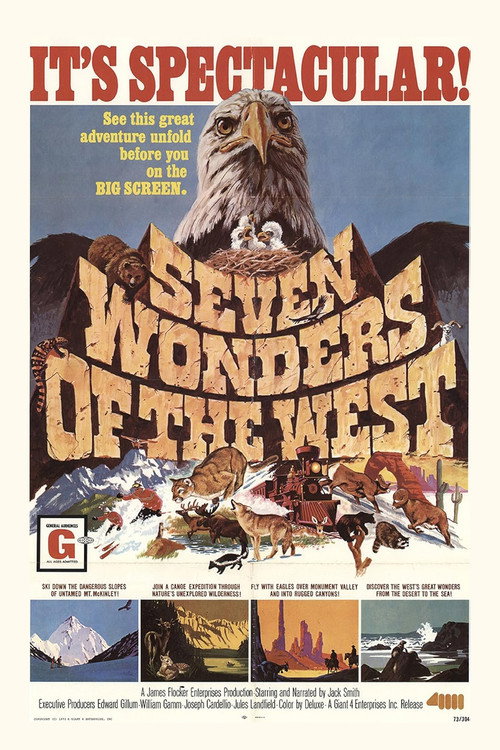
Seven Wonders of the West
1973
No user ratings available yet
Representation score: 0.0 out of 10
Representation Score
Minimal
1956
Director
Andrew Marton, Tay Garnett, Ted Tetzlaff
Runtime
106 minutes
Average Rating
No ratings yetNew Showbiz Analysis
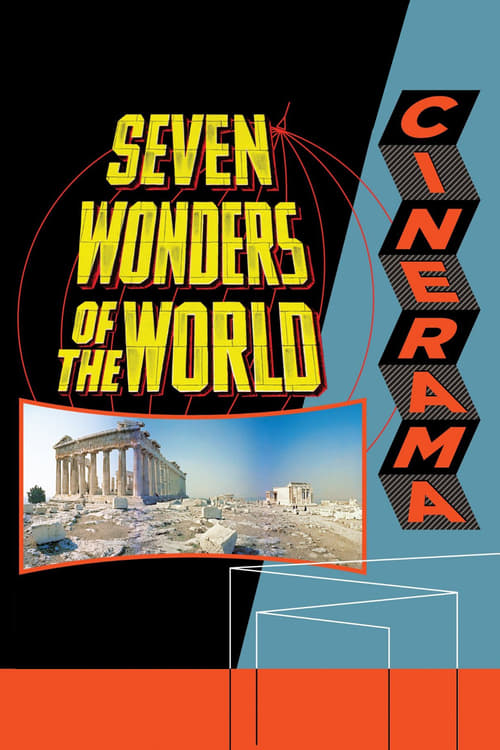
This Cinerama-era documentary serves as a visual tour of global landmarks, focusing on the grandeur of the sites rather than human identity. The narrative structure centers on documenting architectural and natural wonders, prioritizing the spectacle over social complexity. The film reflects its 1956 origins, adhering to mid-century social norms. It does not aim to explore diverse identities or disrupt traditional hierarchies, instead reinforcing a Western-centric view of global geography. Overall, the work functions as an educational travelogue, emphasizing the host's perspective of discovery and limiting the depth of cultural and gendered representation.
Category Breakdown
The film focuses on global landmarks and does not include any characters or stories related to LGBTQ+ identities.
The narrative is centered around a male perspective from the mid-century era, with limited roles for women.
The film showcases various global locations but primarily presents these places through a Western viewpoint, emphasizing the host's exploration.
The film highlights historical grandeur through a conventional mid-century lens, focusing on the host's perspective of discovery.
The film does not feature any characters with disabilities or address issues related to accessibility.
Present on Screen
Limited or Absent
Official Synopsis
Seven Wonders of the World is a 1956 film in Cinerama. Lowell Thomas searches the world for natural and man made wonders and invites the audience to try to update the ancient Greek list of "Seven Wonders of the World."
1973

2014

1951
2010

1956

2011
1954

2016
No reviews yet. Be the first to share your thoughts on this movie!
Use the rating form above to leave a star rating and optional review.