M Is for Man, Music and Mozart
1991
No user ratings available yet
Representation score: 5.8 out of 10
Representation Score
Excellent
1987
RDirector
Charles Sturridge, Nicolas Roeg, Julien Temple, Bruce Beresford, Jean-Luc Godard, Robert Altman, Franc Roddam, Ken Russell, Derek Jarman, Bill Bryden
Runtime
97 minutes
Average Rating
No ratings yetNew Showbiz Analysis
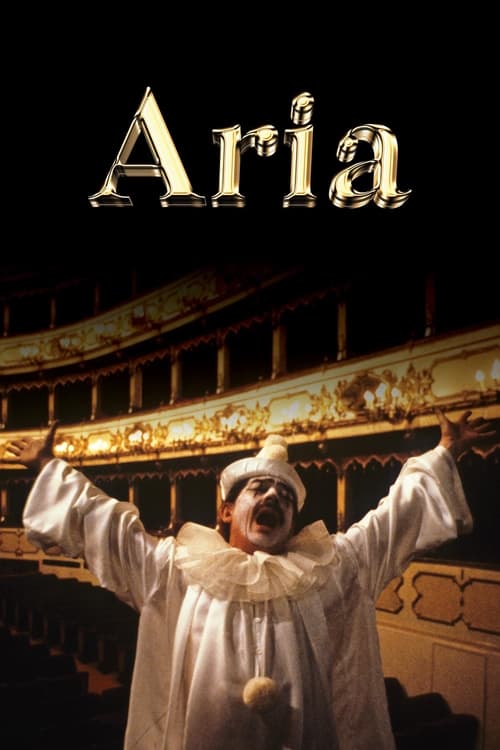
Aria is a postmodern collage that succeeds through its fragmented, kaleidoscopic structure. By using ten different directors, the film avoids a singular thematic consensus, instead offering a pluralistic worldview that challenges traditional cinematic cohesion. The work's strength lies in its stylistic subversion. The inclusion of auteurs like Jarman and Godard allows the film to interrogate identity and deconstruct cultural certainties through avant-garde sensibilities. However, the anthology format leads to significant inconsistencies. While it disrupts certain hierarchies, it lacks a unified progressive manifesto and fails to provide consistent representation across racial and disability categories.
Category Breakdown
Derek Jarman’s segment introduces a visual style and imagery that challenges mainstream heterosexual norms. It provides a platform for a queer aesthetic that disrupts traditional expectations.
Gender dynamics vary widely across the anthology. Some segments rely on traditional period-drama clichés, while others use experimental, non-traditional representations to challenge these norms.
Racial representation is inconsistent due to the varied settings of the vignettes. The film does not prioritize a non-Anglo-Saxon majority cast.
The film excels by contrasting high art with low art. This challenges the hierarchy of Western cultural institutions and promotes a sense of subjective truth.
There are no characters with visible or invisible disabilities. The focus remains on aesthetic and musical interpretation rather than character-driven disability stories.
Present on Screen
Limited or Absent
Official Synopsis
Ten short pieces directed by ten different directors, including Ken Russell, Jean-Luc Godard, Robert Altman, Bruce Beresford, and Nicolas Roeg. Each short uses an aria as soundtrack/sound, and is an interpretation of the particular aria.
1991
2007
1963
1979
1989
1975
2013
1996
No reviews yet. Be the first to share your thoughts on this movie!
Use the rating form above to leave a star rating and optional review.