Unseen Forces
1920
No user ratings available yet
Representation score: 2.5 out of 10
Representation Score
Minimal
1928
Director
Richard Maurice
Runtime
66 minutes
Average Rating
No ratings yetNew Showbiz Analysis
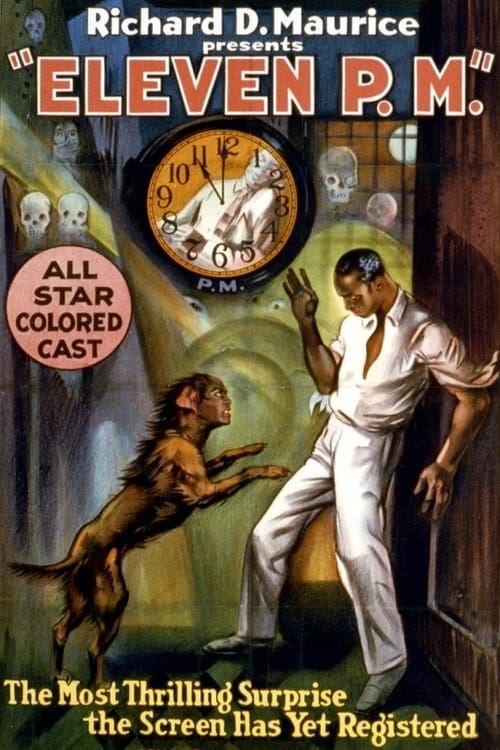
Eleven P.M. is a silent-era drama set in the late 1920s that operates within rigid moralistic frameworks. The plot follows a conventional protector/ward dynamic, focusing on a male violinist's attempt to protect a young girl from social transgressions. Instead of challenging social structures, the film reinforces established spiritual and gender hierarchies. The narrative architecture prioritizes the preservation of innocence through traditionalist lenses, offering little room for multi-layered or subversive storytelling. Ultimately, the film serves as a standard moral drama of its period, utilizing predictable formulas to uphold the social stability of the era.
Category Breakdown
The film does not include any characters with non-binary gender identities or non-cisgender identities. The story focuses on avoiding 'sin,' which reinforces traditional moral standards without challenging the assumption that everyone is straight or cisgender.
The story relies on a conventional protector/ward dynamic where a male character acts as a moral guardian for a vulnerable female character, reinforcing traditional gender roles.
There is no indication of diverse casting or race-bending in the narrative. The film adheres to the homogeneous casting norms typical of 1928 American cinema.
The themes of spirituality and the avoidance of sin suggest a narrative aligned with singular, traditional moralities. It promotes social stability over secularism or moral relativism.
The provided context contains no evidence regarding characters with visible or invisible disabilities.
Present on Screen
Limited or Absent
Official Synopsis
A truly bizarre mixture of sentimentality, spirituality and the supernatural, Eleven P.M. follows an impoverished violinist who tries to protect a young girl from straying into a life of sin -- and features one of the most mind-boggling endings ever (the poster above provides a hint). Produced by the Maurice Film Company of Detroit, Michigan.
1920
1921
1925
1948
1908

1926
1915
1927
No reviews yet. Be the first to share your thoughts on this movie!
Use the rating form above to leave a star rating and optional review.