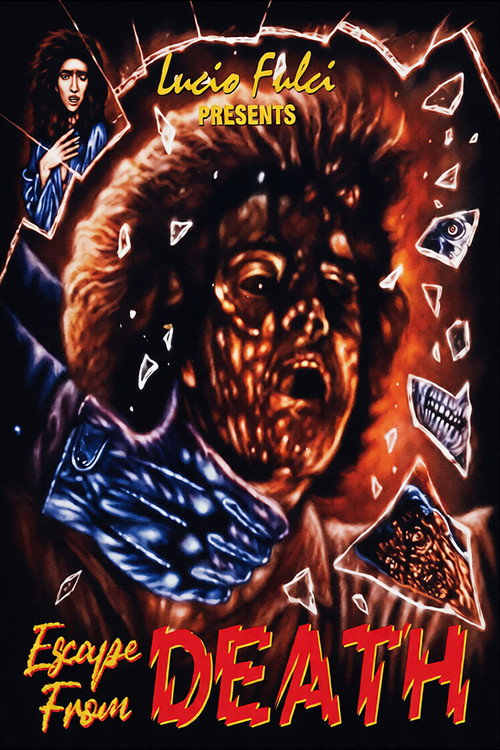
Escape from Death
1989
No user ratings available yet
Diversity score: 1.9 out of 10

1971
Director
Eugenio Martín
Runtime
88 minutes
Average Rating
No ratings yetSynopsis
A wealthy Englishman finds his third wife dead. After the police discover that his first two wives had also died suddenly, an investigation is launched. Meanwhile, a new neighbor moves in and becomes very interested in him.
Overall Score
Limited
Category Breakdown
LGBTQ+ Representation
The film lacks any evidence of queer narratives or non-cisnormative identities. It adheres to a traditional heteronormative structure typical of 1970s mystery-thrillers.
Gender Representation
The story centers on a patriarchal hierarchy revolving around a wealthy male protagonist. Female characters appear to function primarily as plot devices or victims within a male-driven mystery.
Racial & Ethnic Diversity
The narrative focuses on a homogeneous Western demographic. The setting and character descriptions suggest standard Eurocentric casting norms common in early 1970s European cinema.
Religious & Cultural Diversity
The film operates within a traditional Western framework of wealth and class. It lacks any indication of anti-capitalist sentiment or the deconstruction of Western institutions.
Disability Representation
There is no mention of characters with visible or invisible disabilities. No data exists regarding neurodivergence or physical impairments within the character arcs.
Strengths
Areas for Improvement
AI Analysis
The Fourth Victim is a genre piece that prioritizes the conventions of the 1970s mystery-thriller over social subversion. The narrative architecture is built around a wealthy male protagonist, which establishes a clear patriarchal hierarchy. Representation is limited by the era's standard tropes. The film focuses on a homogeneous Western demographic and traditional socioeconomic structures, offering little room for intersectional perspectives or the disruption of established cultural norms. Ultimately, the film functions as a standard period thriller. It reinforces existing social hierarchies rather than challenging them through diverse character agency or varied cultural perspectives.
No reviews yet. Be the first to share your thoughts on this movie!
Use the rating form above to leave a star rating and optional review.