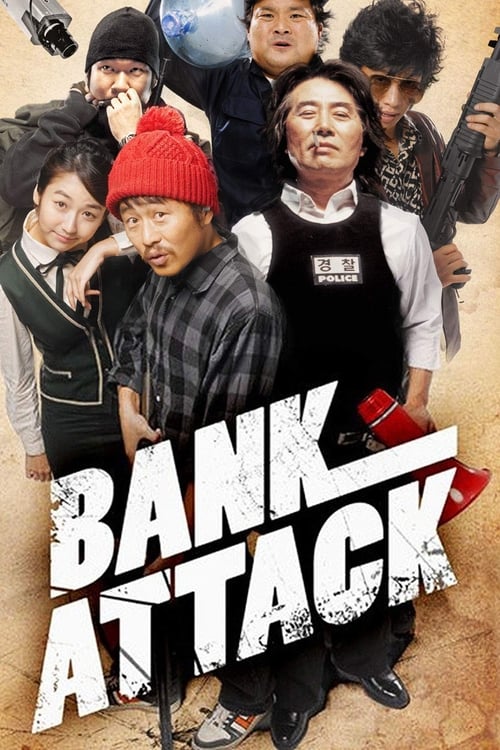
Bank Attack
2007
No user ratings available yet
Diversity score: 4.6 out of 10

1997
Director
Park Chan-wook
Runtime
103 minutes
Average Rating
No ratings yetSynopsis
Han is a suicidal saxophonist, Mun is a violent simpleton with an I.Q. of 80, and Maria is a single mother with dreams of becoming a nun. Han has tried numerous times to kill himself, but nothing ever works. After witnessing his wife's infidelity, it's the last straw.
Overall Score
Good
Category Breakdown
LGBTQ+ Representation
The film lacks explicit depictions of non-heteronormative identities. While it explores infidelity and the breakdown of the nuclear family, these themes do not center LGBTQ+ characters.
Gender Representation
Maria avoids passive feminine archetypes by pursuing religious devotion as a single mother. Her journey is driven by existential needs rather than domestic stability.
Racial & Ethnic Diversity
The cast is ethnically homogeneous, reflecting its South Korean production context. It offers a localized perspective on crime without adopting a Western-normative lens.
Religious & Cultural Diversity
The narrative critiques traditional institutions like marriage and religion. It portrays these structures as sources of trauma and disillusionment rather than pillars of stability.
Disability Representation
Mun’s lower cognitive capacity is central to the plot. The film treats his neurodivergence as an integral part of his agency rather than a mere punchline.
Strengths
Areas for Improvement
AI Analysis
Park Chan-wook’s *Trio* is a dark comedic study of social displacement. It succeeds by centering characters on the periphery of society, such as a disillusioned musician and a cognitively impaired individual. The film's strength lies in its refusal to uphold traditional moral hierarchies. By deconstructing the 'ideal' life, the film replaces standard crime tropes with a portrait of characters struggling against social expectations. It effectively uses its protagonists to critique the very institutions—marriage and religion—that typically govern mainstream cinema.
2007
2018

2018

2017
2008

2002
2017

2010
1986

1989
1998

1998
No reviews yet. Be the first to share your thoughts on this movie!
Use the rating form above to leave a star rating and optional review.