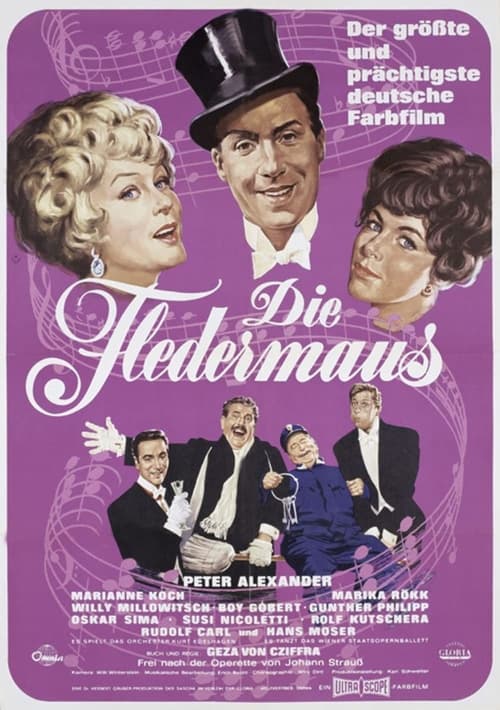
Die Fledermaus
1962
No user ratings available yet
Representation score: 1.0 out of 10

Representation Score
Minimal
1946
Director
Géza von Bolváry
Runtime
100 minutes
Average Rating
No ratings yetNew Showbiz Analysis
Die Fledermaus (1946) is a quintessential musical comedy that prioritizes escapism and classical romantic clichés. The narrative adheres to the traditionalist standards of mid-century European cinema, focusing on social decorum and comedic irony. The film maintains a highly homogeneous worldview. It reinforces the demographic and ideological status quo of its era, offering a world that is consistent with aristocratic European traditions. Ultimately, the production functions as a genre-standard operetta. It seeks to entertain through lighthearted deception rather than challenging established social hierarchies or introducing diverse perspectives.
Category Breakdown
The film focuses on heterosexual relationships and marital infidelity. There is no indication of LGBTQ+ identities or same-sex intimacy in the plot.
Female characters like Adele play a significant role in driving the mistaken identity storyline. However, they navigate social hierarchies mainly through romantic maneuvering rather than challenging patriarchal authority.
The setting reflects a homogeneous, Eurocentric aristocratic environment. There are no non-white characters or color-blind casting.
The story celebrates high-society aristocratic culture and social rituals. It functions as a lighthearted comedy of manners rather than a critique of Western institutions.
The film provides no evidence regarding the inclusion or depiction of characters with physical or neurodivergent disabilities.
Present on Screen
Limited or Absent
Official Synopsis
Theater director Falke, dressed as a bat, ends up in prison after a merry carnival night. Director Frank only releases him after some time. Falke decides to take revenge on his friend Gabriel von Eisenstein, to whom he owes the whole affair. The annual masked ball at Prince Orlofsky's provides the opportunity. Falke stages a game of mistaken identity in which Eisenstein does not recognize his own wife and courts her, while maid Adele appears as the countess. Eisenstein is duped, Falke has taken his revenge.
1962
1948
1986
1959
1958
1953
1961

1934
No reviews yet. Be the first to share your thoughts on this movie!
Use the rating form above to leave a star rating and optional review.