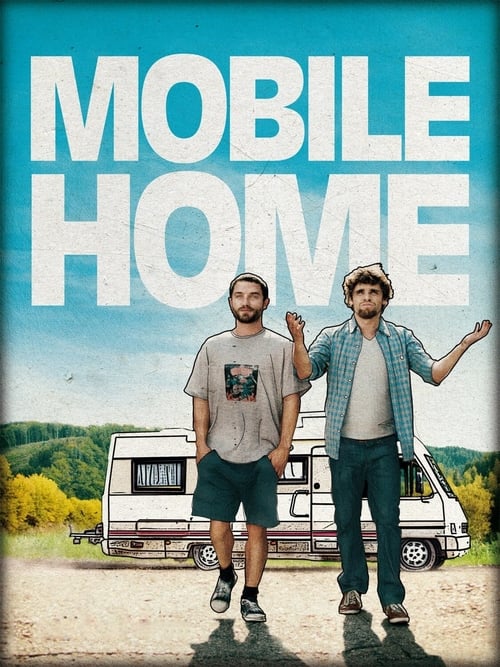
Mobile Home
2012
No user ratings available yet
Diversity score: 2.9 out of 10

2015
Director
Bruno Podalydès
Runtime
105 minutes
Average Rating
No ratings yetSynopsis
Michel, a fifty year old man, graphic designer, decides to change the urban lifestyle and go on an adventure. Fascinated by airmail, he dreams at Jean Mermoz when he's on scooter. One day, Michel sees a picture of a kayak.
Overall Score
Limited
Category Breakdown
LGBTQ+ Representation
The film follows a traditional, heteronormative narrative arc. It lacks queer-coded subtext or non-cisnormative identities, remaining strictly within conventional social frameworks.
Gender Representation
The story centers on a solitary male journey of self-discovery. Female characters occupy peripheral roles and lack the agency to challenge traditional gender dynamics.
Racial & Ethnic Diversity
Casting reflects a homogeneous European urban setting. The narrative operates within a standard Western demographic context without intentional efforts toward intersectional visibility.
Religious & Cultural Diversity
The film offers a nuanced critique of capitalist monotony and the professional rat race. It uses an existentialist lens to explore personal liberation from social order.
Disability Representation
There is no presence of physical disability or neurodivergence as a narrative driver. The protagonist's journey focuses on psychological whimsy rather than accessibility.
Strengths
Areas for Improvement
AI Analysis
The Sweet Escape is a character-driven study of urban existentialism. It succeeds in deconstructing the monotony of modern professional life, offering a gentle critique of the rigid structures that govern the daily commute and the capitalist work-life hierarchy. However, the film lacks a progressive approach to representation. The narrative is heavily centered on a singular male experience, leaving little room for diverse voices or intersectional perspectives. The casting and character arcs remain largely within traditional, homogeneous Western norms. Ultimately, while the film provides a thoughtful exploration of individual liberation, it does not engage with the subversion of social hierarchies or the inclusion of marginalized identities.
2012
1996
2011

2009

2021
2014
2009

2017

2010

2004

2016

2017
No reviews yet. Be the first to share your thoughts on this movie!
Use the rating form above to leave a star rating and optional review.