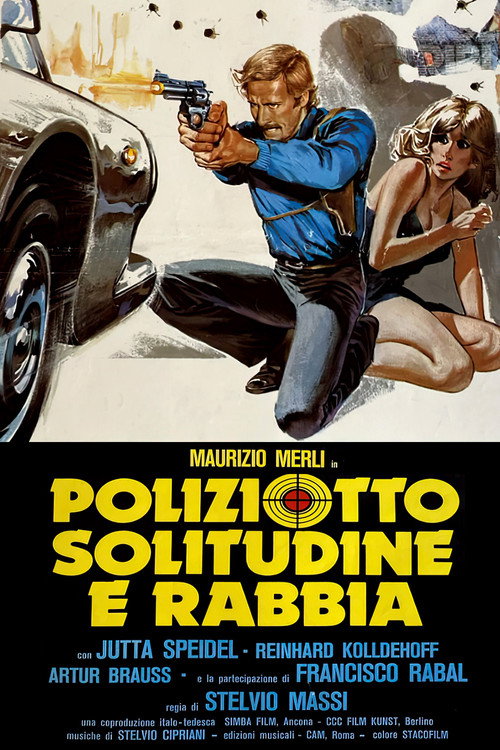
The Rebel
1980
No user ratings available yet
Representation score: 4.0 out of 10
Representation Score
Limited
1979
Director
Stelvio Massi
Runtime
103 minutes
Average Rating
No ratings yetNew Showbiz Analysis
Hunted City is a gritty exploration of individual justice versus systemic failure. It emphasizes visceral action and urban decay, reflecting the hyper-masculine language of the poliziotteschi genre. The film lacks modern complexity in representing diverse identities or challenging traditional assumptions. However, it achieves some depth by questioning the reliability of traditional institutions like the law and the family. Ultimately, the work serves as a genre piece where social complexity emerges from criminal underworld dynamics rather than diverse identity representation.
Category Breakdown
The film adheres to a conventional, straight-focused framework typical of late-70s Italian action cinema. There are no characters or stories that question the assumption that everyone is straight or cisgender.
The story revolves around a tough cop archetype, emphasizing male authority and physical strength. It examines institutional corruption through masculine confrontation without challenging traditional gender roles.
The film showcases a diverse cast within its setting, including Mario Merola. It portrays intricate power dynamics between various social classes and criminal groups in the Milanese underworld.
The story questions the moral authority of the state and the nuclear family by depicting a corrupt murder corporation. It implies moral relativism through a protagonist who follows a personal code.
There are no visible or invisible disabilities that play a central role in the character arcs or plot progression.
Present on Screen
Limited or Absent
Official Synopsis
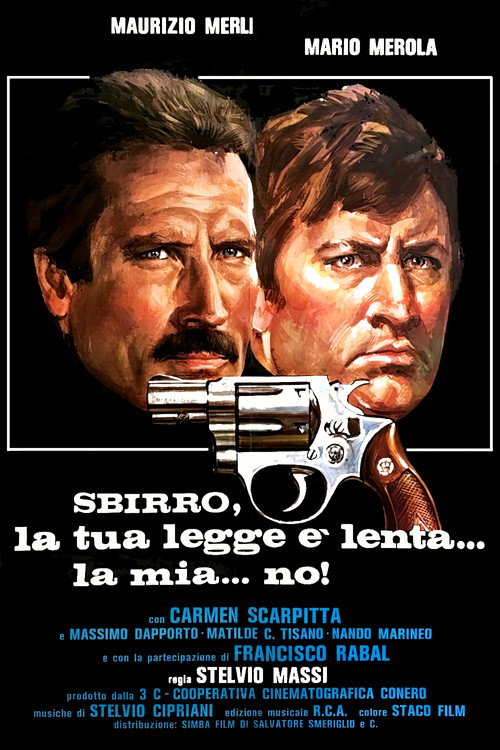
Commissario Paolo Ferro (Maurizio Merli) stars as a (typical) tough cop again. This time he returns to the city of Milan to go after a murder corporation. Acampora (Mario Merola) is believed to be the prime suspect although he later proves to be one of the mafia's targets. As if all that wasn't enough, Paolo has to face his own nephew who seems to be involved in all sorts of dirty business.
1980
1972
1977
1973

1976
1972
1976
1977
No reviews yet. Be the first to share your thoughts on this movie!
Use the rating form above to leave a star rating and optional review.