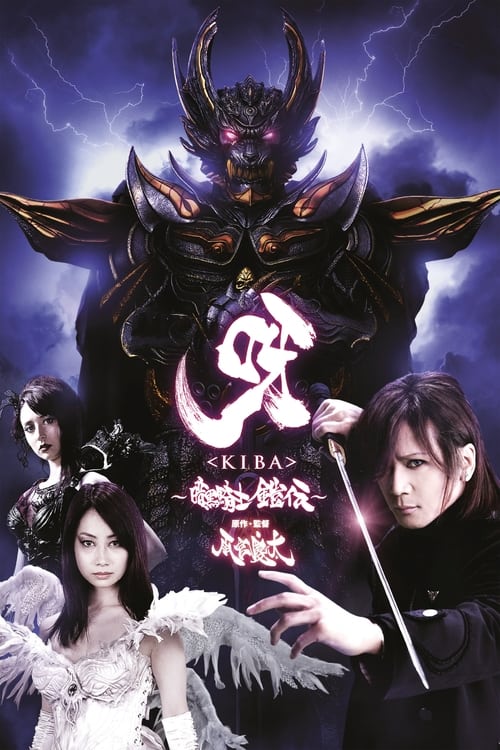
GARO - Kiba: The Dark Knight
2011
No user ratings available yet
Representation score: 2.9 out of 10

Representation Score
Fair
2019
Director
Keita Amemiya
Runtime
106 minutes
Average Rating
No ratings yetNew Showbiz Analysis
Garo: Under the Moonbow is a dark fantasy that prioritizes mythic immersion over diverse representation. It provides women with meaningful combat roles and magical expertise, challenging some traditional gender hierarchies. However, the film remains anchored in conventional narrative structures. The romantic motivations and social orders follow traditional patterns, and the cast lacks ethnic or LGBTQ+ diversity. Ultimately, the work functions as a genre-specific piece that explores individual psychological struggles rather than deconstructing systemic social hierarchies.
Category Breakdown
The film focuses on the conflict between Raiga Saezima and demonic Horrors. It adheres to traditional romantic archetypes, specifically the male protagonist's drive to protect a female figure.
Female Makai Alchemists and Knights are shown who play a significant role in driving the story and combat skills. While the central romance follows traditional patterns, women play important, specialized roles equivalent to their male counterparts.
The cast is culturally homogeneous, reflecting the Japanese setting and established franchise lore. The film prioritizes internal mythic consistency over globalized demographic representation.
The story centers on a duty-bound social order of Makai Knights. It explores subjective morality through tainted armor rather than critiquing traditional or social institutions.
There is no evidence of characters with visible or invisible disabilities portrayed with ability to act. The protagonist's struggle with corrupted armor serves as a metaphor rather than a nuanced exploration of disability.
Present on Screen
Limited or Absent
Official Synopsis
Lurking among us are the Horrors, ancient enemies of our kind. Holding the line against them, down through the ages, are the Makai Knights. Assuming the aspect of Golden Knight Garo, Raiga Saezima has vanquished one such demonic creature, but his magical armour has been tainted with evil. Furthermore, a Knight of the dark has materialized, and taken hold of Mayuri, so dear to Raiga. If he hopes to rescue her, Raiga must board a mysterious train destined for the netherworld. As he advances through the cars of this train, Raiga comes ever closer to confronting his own hidden truths…
2011
1988
2015
2012
2010
2018
2013
2016
No reviews yet. Be the first to share your thoughts on this movie!
Use the rating form above to leave a star rating and optional review.