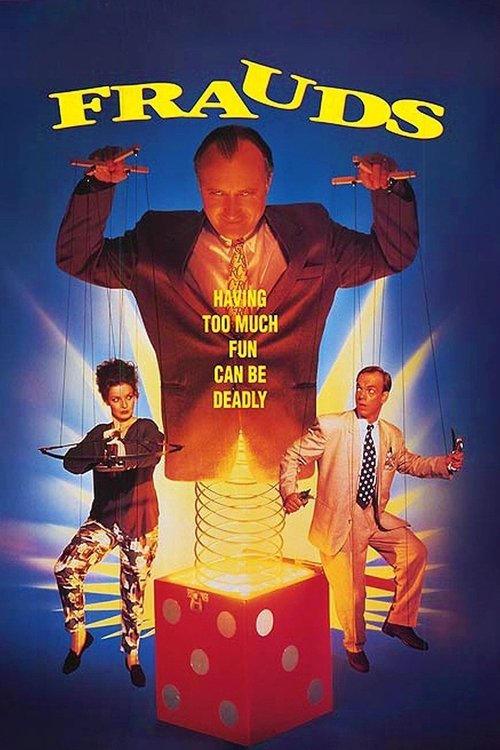
Frauds
1993
No user ratings available yet
Diversity score: 5.9 out of 10

2004
Director
Danny Pang Phat
Runtime
93 minutes
Average Rating
No ratings yetSynopsis
Gay fashion designer Yiu Chun Man (Ekin Cheng) is visited in Hong Kong by his straight twin brother, Yiu Chun Kit (also Ekin Cheng). Kit borrows his brother’s driver’s license, and is then involved in a car crash in which a woman dies (see also Ab-normal Beauty), and Kit falls into a coma. With no ID card, Man is unable to prove his identity, so he assumes the identity of his brother, and takes up with Kit’s girlfriend, Jane, (Charlene Choi), and goes with her to Thailand. Jane, however, is having some money problems, and is deeply indebted to a loan shark (Dayo Wong), who pursues Man and Jane. Kit comes out of his coma and finds himself struggling to fend off the amorous advances of Man's boyfriend (Jan Lamb), who is a high-ranking Hong Kong police officer.
Overall Score
Fair
Category Breakdown
LGBTQ+ Representation
The film centers on a gay fashion designer, making queer identity the primary driver of the plot. It avoids common tragedy tropes, instead normalizing queer presence through a romantic subplot involving a high-ranking police officer.
Gender Representation
Female lead Jane shows agency through her financial struggles and underworld navigation. The dual roles played by Ekin Cheng subvert traditional masculinity by showcasing both vulnerability and forced navigation of crime-ridden environments.
Racial & Ethnic Diversity
The production features a predominantly East Asian, Cantonese-speaking cast. While the setting shifts to Thailand, the narrative focus remains on the interpersonal dynamics of the Hong Kong-based characters.
Religious & Cultural Diversity
The story critiques modern urban capitalism through themes of debt and loan sharks. It uses the bond between twins to explore identity theft and a relativistic view of law and order.
Disability Representation
A medical coma serves as a functional narrative device to facilitate an identity swap. The film does not explore the lived experience or agency of the patient with neurological impairment.
Strengths
Areas for Improvement
AI Analysis
Leave Me Alone stands out for integrating a queer protagonist into a mainstream comedy-crime framework. By making the protagonist's identity central to the plot's tension, the film disrupts heteronormative expectations without relying on typical cinematic tragedies. However, the film's approach to other demographics is more utilitarian. Disability and racial diversity serve primarily as plot catalysts or background settings rather than being explored through deep, character-driven lenses. Ultimately, the film succeeds in challenging traditional gender archetypes and social hierarchies, even if it remains focused on a specific cultural and linguistic landscape.
1993

2025

2004
1982

2017
2013

1991

1989

2018

1982

1976

2021
No reviews yet. Be the first to share your thoughts on this movie!
Use the rating form above to leave a star rating and optional review.