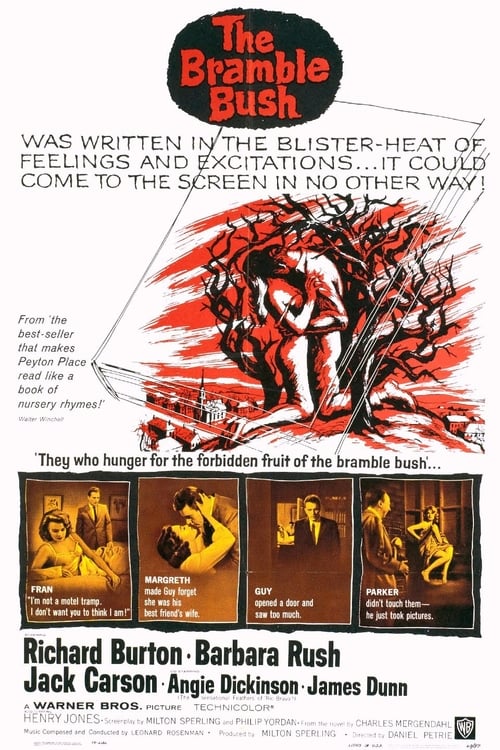
The Bramble Bush
1960
No user ratings available yet
Representation score: 4.7 out of 10

Representation Score
Fair
1963
Not RatedDirector
Daniel Petrie
Runtime
97 minutes
Average Rating
No ratings yetNew Showbiz Analysis
Stolen Hours is a product of its 1963 era, functioning as a traditional melodrama. The narrative prioritizes established social hierarchies and conventional romantic paradigms over any meaningful disruption of systemic norms. The film centers on a singular, high-stakes emotional arc involving a medical diagnosis. While this provides a central focus, it relies on period-typical clichés that emphasize vulnerability and professional authority rather than exploring multiple aspects of identity. Ultimately, the work reflects the standard social constraints of the early sixties, offering a sentimentalized view of romance and illness without challenging the status quo.
Category Breakdown
The film focuses on a heterosexual relationship between a patient and her doctor, with no representation of non-binary gender identities or critiques of the assumption that everyone is straight.
A woman drives the emotional storyline, but her role is tied to a medical crisis. Her influence is linked to traditional gender roles and professional authority structures.
The story lacks diverse casting or characters from non-Anglo-Saxon backgrounds. It seems to follow the homogeneous casting practices common in mid-century dramas.
The plot follows a traditional dramatic arc rooted in conventional morality. It does not challenge Western or secular norms, favoring mid-century sentimentality.
The protagonist's brain tumor introduces themes of vulnerability. However, the condition may primarily serve as a device to evoke sympathy rather than explore true autonomy.
Present on Screen
Limited or Absent
Official Synopsis
A woman diagnosed with a brain tumor falls in love with her doctor.
1960
1939

1976
1966

1966
1958

1950

1965
No reviews yet. Be the first to share your thoughts on this movie!
Use the rating form above to leave a star rating and optional review.