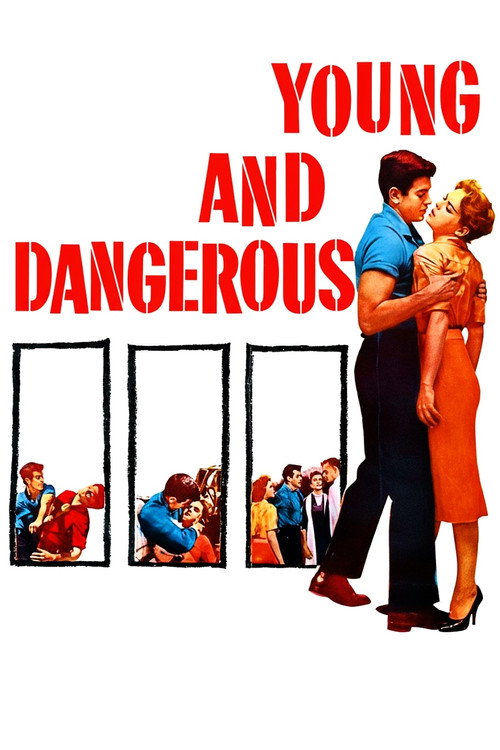
Young and Dangerous
1957
No user ratings available yet
Representation score: 0.9 out of 10
Representation Score
Minimal
1960
TV-14Director
O'Dale Ireland
Runtime
72 minutes
Average Rating
No ratings yetNew Showbiz Analysis
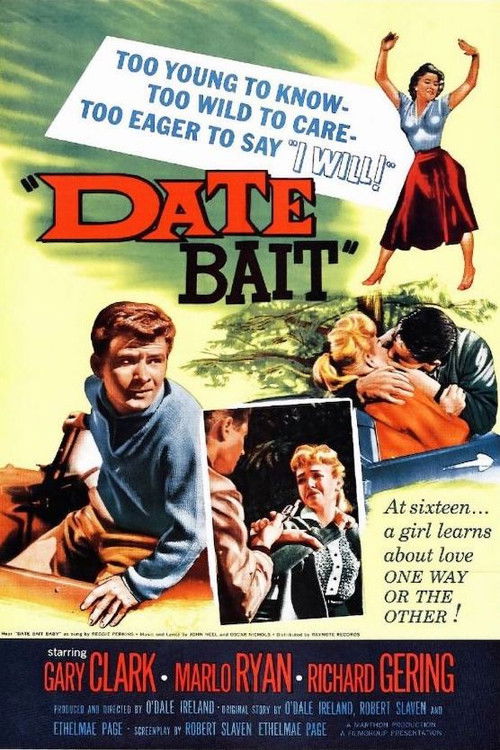
Date Bait is a product of the 1960s delinquent drama era, prioritizing sensationalism over social progress. It relies heavily on established archetypes of the period, focusing on teenage rebellion and criminal underworlds. The film adheres to the social norms of its time, offering little in the way of diverse representation. Characters serve specific plot functions rather than representing varied lived experiences. Ultimately, the production lacks intentionality regarding systemic power dynamics, instead reinforcing traditional hierarchies and cautionary moral frameworks.
Category Breakdown
The film does not include any representation of LGBTQ+ identities. The main romantic relationship follows a traditional heterosexual storyline typical of 1960s films.
Female characters play minor roles and often act as victims of male conflicts. The lead character asserts herself through her marriage plans but remains vulnerable to male adversaries.
The cast and setting appear uniform, with no significant racial or ethnic diversity. The story centers on white, middle-class life and its edges.
The film challenges the stability of the home by portraying parents as obstacles. However, its focus on crime often serves as a cautionary tale rather than a critique of societal issues.
There is no meaningful representation of disabilities. A character’s mental illness is used mainly as a tool for creating antagonism.
Present on Screen
Limited or Absent
Official Synopsis
Two wild and rebellious teenagers in love find that their eager wedding plans are being complicated by family members and roughneck gangsters.
1957

1953
1960

1961

1960
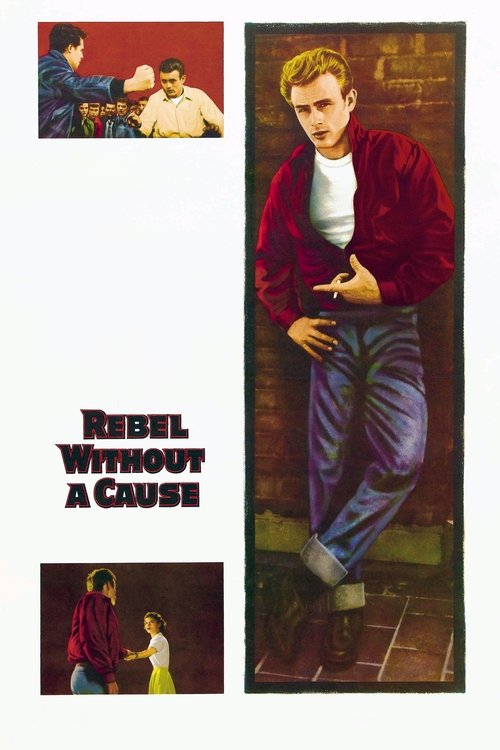
1955
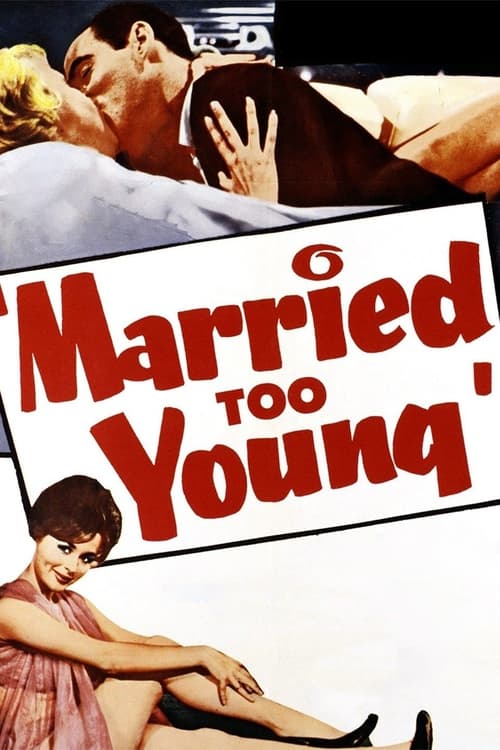
1962

2015
No reviews yet. Be the first to share your thoughts on this movie!
Use the rating form above to leave a star rating and optional review.