The Swing
1983
No user ratings available yet
Representation score: 1.1 out of 10
Representation Score
Minimal
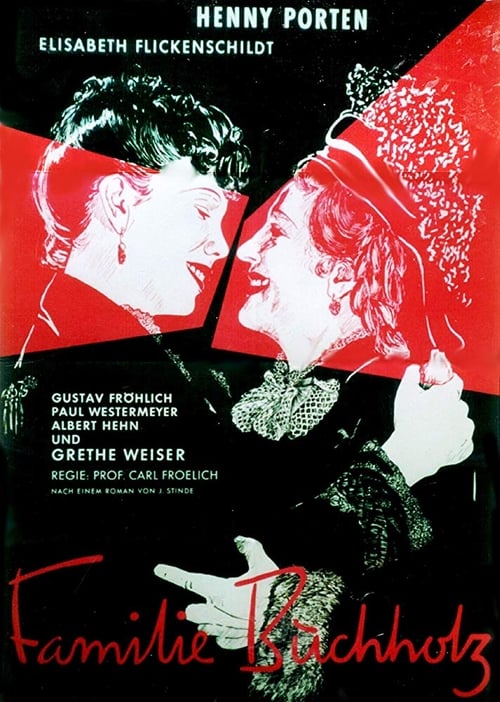
1944
Director
Carl Froelich
Runtime
92 minutes
Average Rating
No ratings yetNew Showbiz Analysis
The Buchholz Family is a period drama that reinforces established social, gender, and ethnic hierarchies. Produced in 1944, the film upholds traditional social structures and nationalistic narratives. The narrative centers on a specific German bourgeois family in late 19th-century Berlin. This setting, along with the era of production, results in a work that upholds conventional social norms without challenging them. Overall, the film presents a highly homogeneous and conservative view of family and society, offering minimal disruption to traditional cultural values.
Category Breakdown
The film does not include any LGBTQ+ identities or same-sex relationships. It emphasizes traditional family units centered around heterosexual relationships.
The story follows strict 19th-century gender roles, emphasizing domestic duties and traditional feminine virtues while highlighting patriarchal authority within the family.
The cast is ethnically uniform, reflecting the demographics of 19th-century Berlin. There is no indication of diverse casting or actors playing roles outside their traditional backgrounds.
The film promotes traditional Western values, emphasizing the sanctity of the family unit and the social hierarchy of the time.
There is insufficient evidence to determine how characters with physical or mental challenges are portrayed. It is unclear if they possess ability to act or serve as plot devices.
Present on Screen
Limited or Absent
Official Synopsis
Based on an 1884 novel by Julius Stinde, it is a family chronicle set in late nineteenth century Berlin.
1983
1987
1974

1969
1959
1948
1938
1934
No reviews yet. Be the first to share your thoughts on this movie!
Use the rating form above to leave a star rating and optional review.