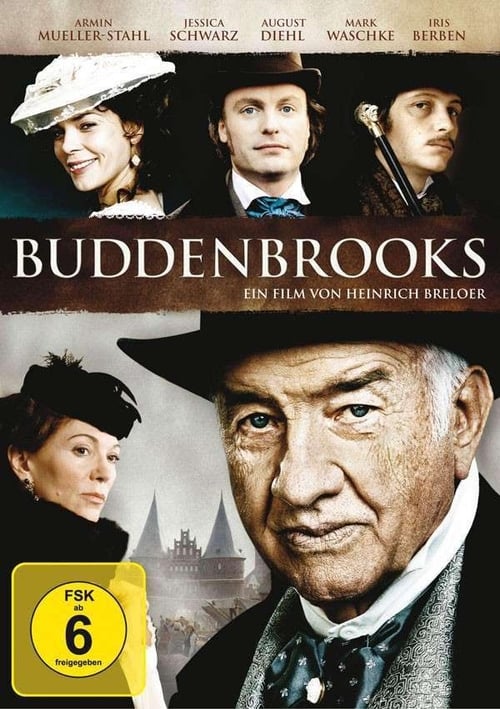
Buddenbrooks
2008
No user ratings available yet
Representation score: 4.3 out of 10
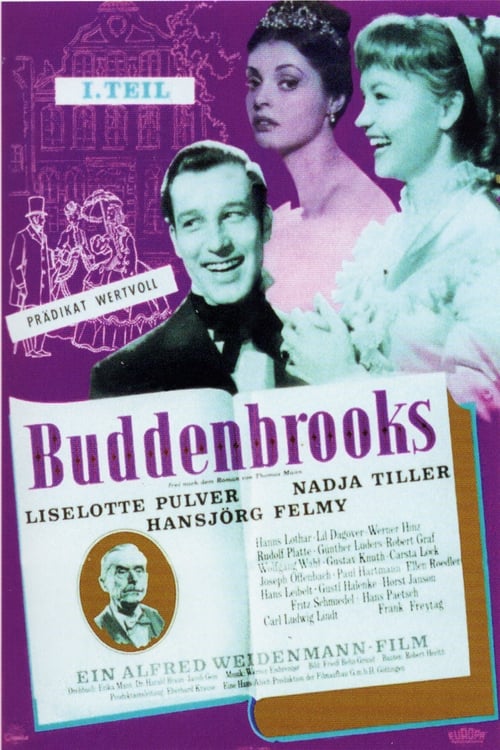
Representation Score
Limited
1959
Director
Alfred Weidenmann
Runtime
99 minutes
Average Rating
No ratings yetNew Showbiz Analysis
This period drama accurately reproduces the social norms of 19th-century Germany, preserving the rigid class and gender hierarchies of the era. It studies the decline of a merchant dynasty through a conservative, fatalistic perspective, reinforcing traditional expectations without challenging patriarchal or ethnic homogeneity. Ultimately, the production upholds the social fabric of the original literary universe without updating its views on identity or ability to act.
Category Breakdown
The film strictly follows the social structures of 19th-century Lübeck, where there is no representation of LGBTQ+ identities or same-sex relationships.
Gender roles are traditional, with male characters driving the family business while women manage the household and social status.
The cast is ethnically uniform, reflecting the German bourgeoisie of the time without diverse ethnic viewpoints.
The story focuses on the decline of a merchant dynasty through a fatalistic lens, emphasizing tradition and lineage without addressing broader societal critiques.
The film does not significantly address neurodivergence, physical disabilities, or mental health issues, focusing instead on socioeconomic and psychological challenges.
Present on Screen
Limited or Absent
Official Synopsis
First part of two of the saga of the troubled Buddenbrook family and their business in mid 19th century Germany.
2008

1969

2003
1976
1987
2015

1940
2015
No reviews yet. Be the first to share your thoughts on this movie!
Use the rating form above to leave a star rating and optional review.