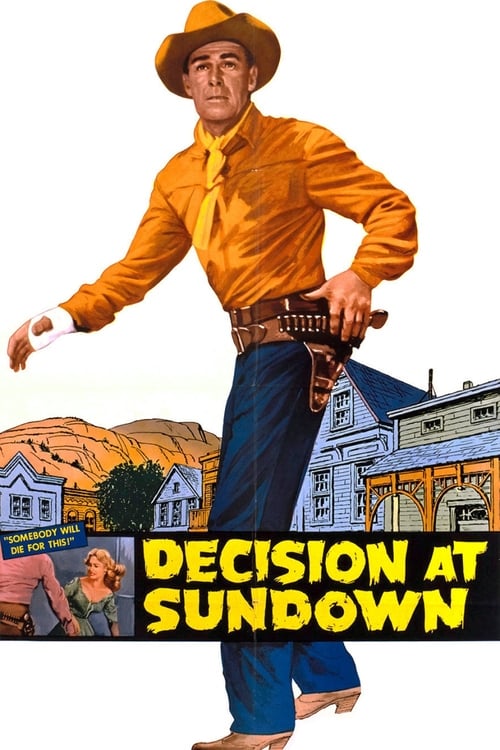
Decision at Sundown
1957
No user ratings available yet
Diversity score: 2.7 out of 10

1957
Director
Gerd Oswald
Runtime
75 minutes
Average Rating
No ratings yetSynopsis
After serving a year for a killing in self-defense, gunfighter Brock Mitchell tries to help his younger brother save his ranch but a crooked lawyer has other ideas.
Overall Score
Limited
Category Breakdown
LGBTQ+ Representation
The film lacks any indication of LGBTQ+ characters or narratives. It adheres to the traditional gender and orientation archetypes standard to the 1957 studio system.
Gender Representation
The story centers on male-driven conflicts involving gunfighters and brothers. It relies heavily on traditional masculine leadership and the protector trope without subverting gender hierarchies.
Racial & Ethnic Diversity
The production reflects the era's tendency toward homogeneous casting. The narrative focuses on Anglo-Saxon protagonists and lacks evidence of diverse ensemble roles or intersectional representation.
Religious & Cultural Diversity
Themes of land ownership and individual justice align with traditional Western values. The film utilizes the legal system as a site of conflict rather than critiquing Western institutions.
Disability Representation
There is no information regarding the inclusion of characters with physical or neurodivergent disabilities.
Strengths
Areas for Improvement
AI Analysis
Fury at Showdown is a conventional Western that reinforces the social and gender hierarchies of the 1950s. The narrative architecture is built around male-centric struggles for land and justice, following established genre tropes rather than challenging them. The film lacks meaningful intersectional representation, focusing instead on a localized conflict that mirrors the era's standard reliance on Anglo-Saxon protagonists. It functions as a period-typical piece of cinema that prioritizes traditional values of individual merit and strength. Ultimately, the production does not attempt to disrupt cinematic norms or provide diverse perspectives, remaining firmly within the established boundaries of the mid-century Western genre.
1957
1938
1954
1935
1956
1961
1935
1971
1961
1963
1955
1962
No reviews yet. Be the first to share your thoughts on this movie!
Use the rating form above to leave a star rating and optional review.