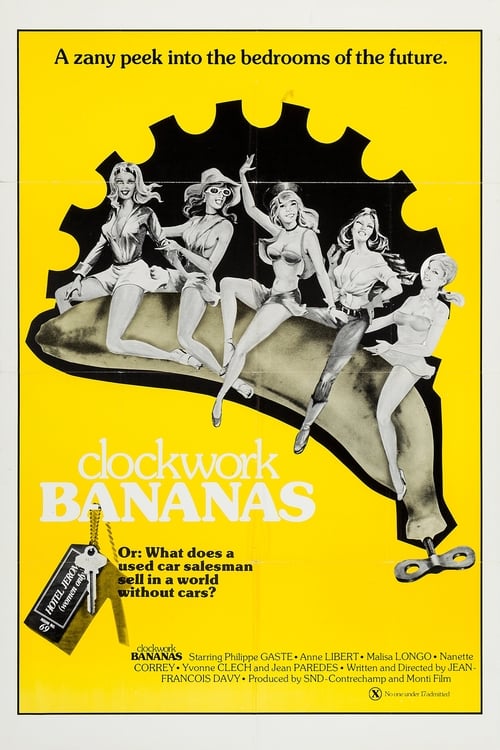
Clockwork Bananas
1974
No user ratings available yet
Representation score: 3.5 out of 10
Representation Score
Limited
1970
Director
Jean-Pierre Mocky
Runtime
90 minutes
Average Rating
No ratings yetNew Showbiz Analysis
The film, titled 'The Stud,' prioritizes irreverence over demographic representation. It serves as a critique of social hierarchies and institutional corruption rather than a platform for underrepresented identities. While the film challenges traditional morality through its protagonist's absurd 'pleasure center,' it remains anchored in conventional gender roles and a homogeneous social landscape. The lack of multi-layered complexity keeps the diversity profile low. Ultimately, the film's strength lies in its postmodern subversion of social contracts, even as it fails to provide meaningful visibility for LGBTQ+ or diverse racial groups.
Category Breakdown
The film focuses on heterosexual relationships and does not include non-binary gender identities or same-sex intimacy.
Gender roles are centered around male pursuit and female emotional vulnerability. Although there are occasional satirical elements that challenge these roles, the film largely relies on traditional gender stereotypes.
The setting reflects a homogeneous social circle in the South of France. There is no indication of intentional racial diversity or casting that includes multiple backgrounds.
The narrative offers a cynical critique of Western institutional stability and state-run corruption. It uses satire to challenge conventional expectations of civic responsibility and morality.
A character attempts suicide, suggesting psychological distress, but it is unclear if this is handled with ability to act. There is insufficient evidence to determine if neurodivergence is addressed.
Present on Screen
Limited or Absent
Official Synopsis
Veterinary surgeon William Chaminade is having a peaceful holiday in the South of France when he is witness to an event that will change not only his life but the destiny of France! A young woman tries to kill herself by jumping from the upstairs window of the hotel where he is staying. Thanks to the services of a passing athlete, the woman is unharmed, and she reveals that her distress is down to her husband’s apparent lack of interest in her. Immediately, Chaminade has a brainwave. He will open a special centre for people like this unfortunate young woman, who will be able to satisfy their romantic needs, at the tax payers’ expense. All is well until this innovative ’pleasure centre’ draws the attention of an over-zealous tax inspector, Dupuis...
1974
1978

1988
1964
1976
1969
1979

1963
No reviews yet. Be the first to share your thoughts on this movie!
Use the rating form above to leave a star rating and optional review.