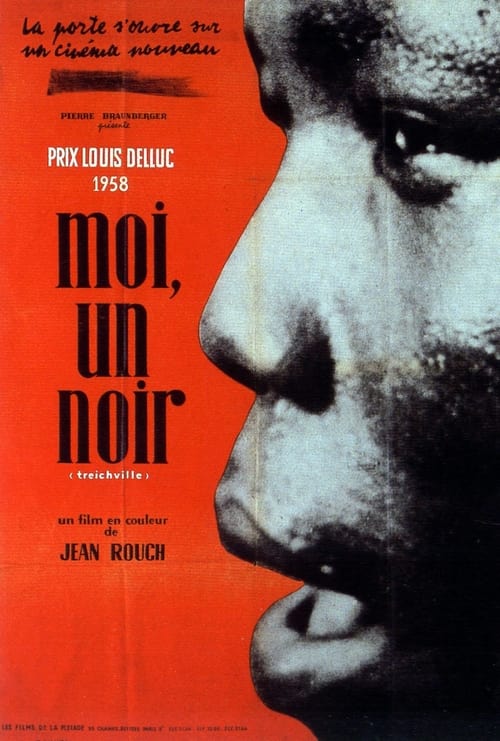
I, a Negro
1959
No user ratings available yet
Representation score: 4.9 out of 10
No Poster Available
Representation Score
Fair
1993
Director
Jean Rouch
Runtime
102 minutes
Average Rating
No ratings yetNew Showbiz Analysis
Madame l'eau is a profound deconstruction of the colonial ethnographic tradition. By using a collaborative filmmaking approach, the film shifts the power dynamic between the filmmaker and the subject. It moves beyond simple observation to highlight non-Western perspectives. The film's strength lies in its post-colonial lens, which challenges the dominance of Western institutional approaches. It portrays West African social structures as complex and self-sufficient, rather than peripheral to a Western viewpoint. Its narrative structure disrupts the notion of Western technological superiority through poetic and mythic storytelling.
Category Breakdown
The film highlights traditional communal structures and spiritual practices. It does not include any representation of non-traditional gender identities or queer stories.
The narrative challenges traditional gender roles by focusing on a woman with significant spiritual authority. Placing Madame l'eau as a central figure gives her a powerful role that counters patriarchal norms.
The film features a predominantly non-white cast made up of actual community members. This approach avoids including someone from a minority group without giving them real depth and emphasizes indigenous experiences and ability to act over a Western perspective.
The story critiques Western development models by emphasizing indigenous spirituality and subjective morality. It questions how external progress can disrupt local social cohesion.
The film explores the human condition through ritual and environmental interactions. However, it does not feature any characters with visible or invisible disabilities.
Present on Screen
Limited or Absent
Official Synopsis
"Their land drought-stricken, three Nigerien farmers (and their donkey) travel to Holland to investigate the possibility of importing windmill technology for use on the plains of Niger. A follow-up to JAGUAR, PETIT À PETIT, and COCORICO MONSIEUR POULET! – undertaken with his longtime filmmaking partners Damouré Zika, Lam Ibrahima Dia, and Tallou Mouzourane – Rouch’s feature is a surreal tale of mythic proportions, full of antic humor and poetic digressions. But beyond the laughs and reveries, MADAME L’EAU is also a poignant commentary on the ‘poisoned gifts’ brought to West Africa by development projects. As Faye Ginsburg once remarked, this is a film about what the world would look like “if Jean Rouch was the president of the World Bank.”" - Anthology Film Archives
1959
1973
1984
1970
1967
1994
2009
2000
No reviews yet. Be the first to share your thoughts on this movie!
Use the rating form above to leave a star rating and optional review.