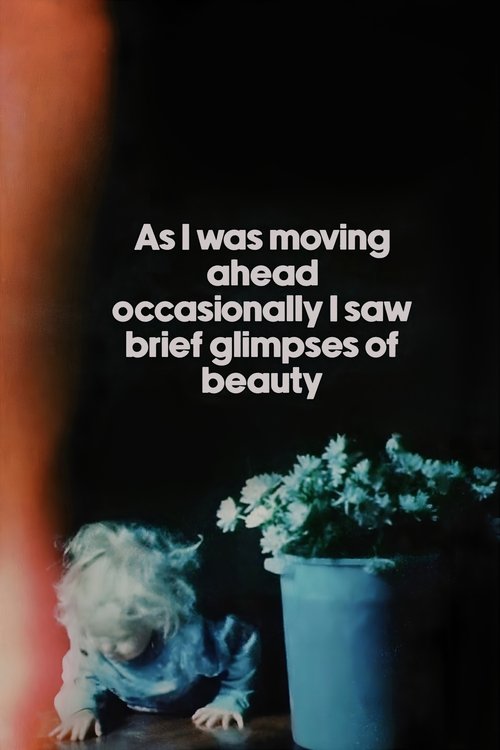
As I Was Moving Ahead Occasionally I Saw Brief Glimpses of Beauty
2000
No user ratings available yet
Representation score: 5.2 out of 10
Representation Score
Fair
2012
Director
Jonas Mekas
Runtime
68 minutes
Average Rating
No ratings yetNew Showbiz Analysis
Jonas Mekas utilizes a fragmented, autobiographical aesthetic to disrupt conventional cinematic hierarchies. By eschewing structured, institutional plots in favor of poetic reflections, the film aligns with progressive, postmodern sensibilities. The documentary functions as a non-linear exploration of identity and time. Its strength lies in its refusal to conform to traditional narrative expectations, opting instead for a subjective celebration of memory. While the film captures multicultural urban environments and diverse social circles, specific details regarding racial density and disability representation are not explicitly documented in the footage provided.
Category Breakdown
The film's diary-style format focuses on fragmented personal truths, challenging the assumption that everyone is straight or cisgender. While specific depictions of intimacy are not detailed, the narrative structure reflects diverse social circles.
The film uses an impressionistic view of domestic life to disrupt the traditional male gaze. It offers a communal portrayal of gendered existence through glimpses of family and friends.
The footage captures city life and global travel over forty years, serving as a visual archive of shifting demographics. However, the specific density of non-Anglo-Saxon representation is unconfirmed.
The work deconstructs singular Western histories by prioritizing personal truth and subjective morality. It favors a cyclical, spiritual understanding of life over capitalist notions of progress.
There is no explicit evidence regarding the portrayal of physical or neurodivergent disabilities. The focus remains on the sensory experience of memory.
Present on Screen
Limited or Absent
Official Synopsis
An autobiographical diary film assembled from unused footage shot between 1960 and 2000, interwoven with reflections, music, and glimpses of family, friends, city life, and travel. Mekas transforms these fragments into a poetic celebration of memory, happiness, and the passing of time.
2000
2008
2010
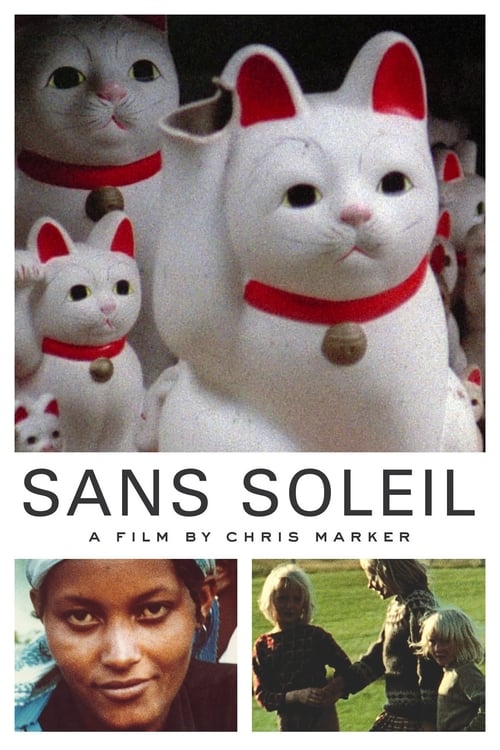
1983

1981

2008
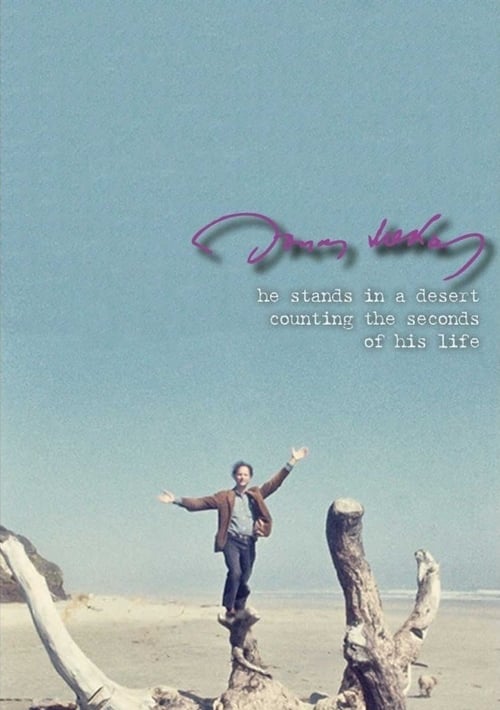
1986
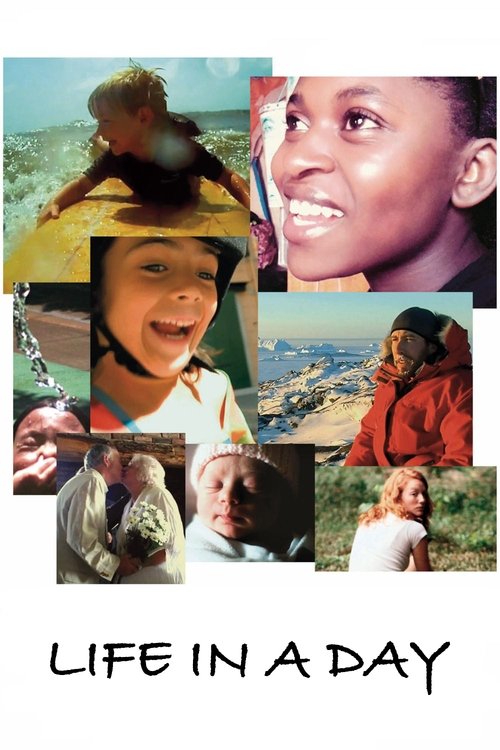
2011
No reviews yet. Be the first to share your thoughts on this movie!
Use the rating form above to leave a star rating and optional review.