You are here:

Old New Mexico

Old New Mexico

Representation Score

1.9/10

Minimal

1940

Approved

Runtime

9 minutes

Average Rating

No ratings yet

New Showbiz Analysis

Old New Mexico serves as an ethnographic and architectural survey typical of its 1940s era. It acknowledges the deep temporal layers of Indigenous habitation, moving beyond a purely Western frontier narrative by highlighting the Navajo and pre-European Santa Fe. However, the film lacks multi-layered complexity. underrepresented groups are treated as subjects of study or parts of a geographical landscape rather than active agents driving the story. The focus remains on observation rather than social subversion. Ultimately, the documentary functions as a pedagogical tool that catalogs culture through a Western lens, providing historical context while remaining limited by the social conventions of its time.

Watch this, not that →

Category Breakdown

Does Old New Mexico have LGBTQ+ representation?

Minimal

The film does not include any LGBTQ+ characters or stories. It focuses on historical sites and demographics, which excludes any exploration of queer identities.

How does Old New Mexico portray gender?

Limited

The narrative centers on male-dominated frontier history and figures like Kit Carson. There is a noticeable lack of visible women's ability to drive the story or challenges to gender hierarchies.

How racially and ethnically diverse is Old New Mexico?

Fair

The film acknowledges Indigenous populations, noting the Navajo reservation and the 7% Indian-origin population. It avoids the 'empty frontier' cliché by highlighting pre-European history.

How does Old New Mexico represent religion and culture?

Fair

The film balances Western institutional history with Indigenous sacredness. However, it maintains a traditional 'touring' perspective rather than a participatory one.

Does Old New Mexico include disability representation?

Minimal

There is no depiction of individuals with physical or neurodivergent disabilities. The content remains focused on architecture and geography.

Present on Screen

  • Acknowledges the enduring presence and traditional way of life of the Navajo people.
  • Disrupts the 'empty frontier' myth by highlighting pre-European history and archaeological sites.
  • Recognizes the sanctity of Indigenous sacred shrines and reservations.

Limited or Absent

  • Lacks women's ability to drive the story, focusing instead on male-dominated historical narratives.
  • Treats Indigenous populations as observational subjects rather than active narrative participants.
  • Fails to address LGBTQ+ identities or disability representation entirely.

Official Synopsis

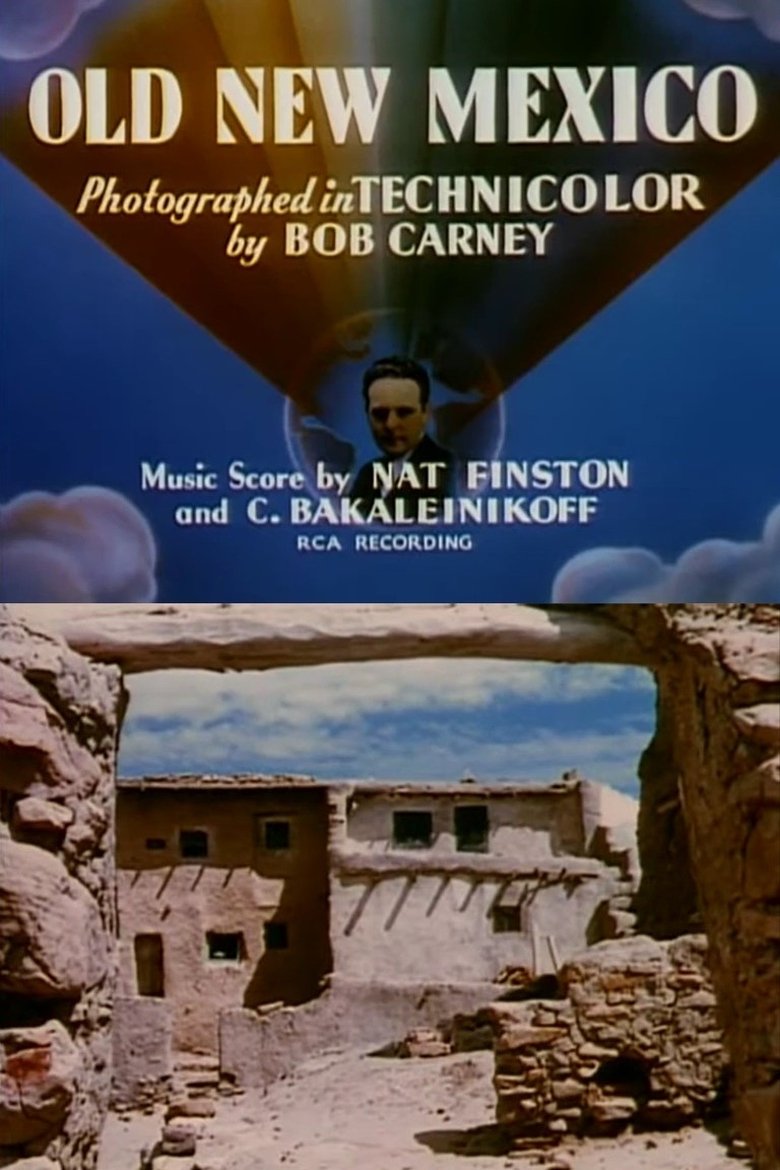
This Traveltalk series short takes viewers on a tour of old New Mexico. Starting in Santa Fe, the oldest state capitol in the USA, the city existed long before European migration. It's unique architecture is its most prominent feature. There are several archaeological sites trying to date when Indians first settled in the area. Seven percent of the population are of Indian origin. Near Taos is the onetime home of Kit Carson whose grave is one of the sacred shrines of New Mexico. The Navajo live on their 14 million acre reservation and continue their traditional way of life.

How are these scores produced? →

Where to Watch

Rate this Movie

No rating selected
Use arrow keys to select a rating from 1 to 5 stars
Optional text review, maximum 2000 characters
Tip: Wrap spoilers with ||double pipes|| to hide them
0/2000 characters
You must be signed in to submit a rating

Reviews

No reviews yet. Be the first to share your thoughts on this movie!

Use the rating form above to leave a star rating and optional review.