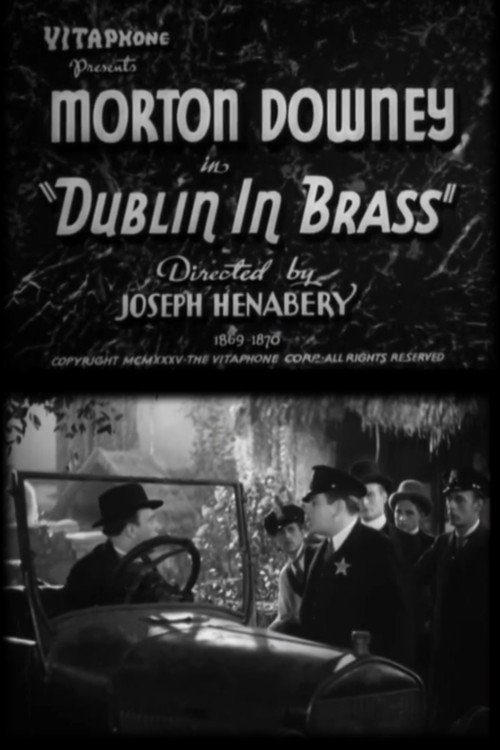
Dublin in Brass
1935
No user ratings available yet
Representation score: 2.5 out of 10
Representation Score
Limited
1935
ApprovedDirector
Joseph Henabery
Runtime
21 minutes
Average Rating
No ratings yetNew Showbiz Analysis
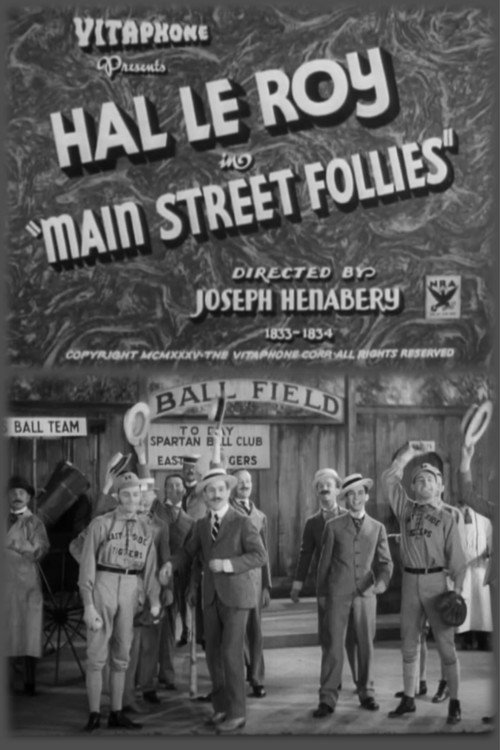
*Main Street Follies* opens on a dusty, provincial street, a visual shorthand for stagnation that the arrival of a vaudeville troupe is meant to cure. The film’s argument is simple: the outsider brings life to the dull. Hal Le Roy, billed as himself, embodies the charismatic winner who elevates the local girl, Miss Wilson, through charm and skill. The camera loves the performers’ physical feats and the star’s confidence, framing the local boy as the awkward, unpolished alternative. The sold meaning is a celebration of the vaudeville lifestyle, where the “gypsy” spirit of the traveling troupe is treated as a liberating force against the town’s rigid stability. However, the film’s internal logic reveals a traditional hierarchy: the woman is the prize, the man is the provider of excitement, and the town is the passive recipient. The star never pays for the disruption; he exits with his dignity intact, leaving the town to return to its mundane routine. The ending reinforces the transient nature of the “follies,” suggesting that the excitement is a brief interlude rather than a permanent change. The film’s values settle on the idea that the outsider’s freedom is admirable, but the settled life is the default. It is a polished, era-specific showcase that upholds traditional gender roles and racial homogeneity while selling the myth of the liberating outsider.
Category Breakdown
Absent. The narrative relies on heterosexual courtship between the local girl and the male performers. No same-sex intimacy or queer identity is depicted in this 1935 short.
Limited. Miss Wilson is the static moral prize, framed for her innocence rather than agency. Male performers drive the plot through skill and charm, treating the woman as the reward for their spectacle.
Absent. The cast is entirely white, reflecting the unmarked racial default of 1930s American vaudeville. No non-white characters appear or influence the story’s dynamics.
Traditional. The film treats small-town stability as the dull baseline that the traveling troupe’s “gypsy” freedom temporarily improves. The outsider’s disruption is framed as liberating, yet the town’s return to routine is the final state.
Absent. No characters with disabilities are present. Physical prowess is celebrated as the primary form of merit, but no impairment is depicted or discussed.
Present on Screen
Limited or Absent
Official Synopsis
A New york producer sends a spy to a nightclub to report back on the musical acts.
1935
1933
1933
1929
1933
1943
1939
1937
No reviews yet. Be the first to share your thoughts on this movie!
Use the rating form above to leave a star rating and optional review.