
Twenty Million Sweethearts
1934
No user ratings available yet
Representation score: 1.1 out of 10
Representation Score
Minimal
1937
ApprovedDirector
John H. Auer
Runtime
62 minutes
Average Rating
No ratings yetNew Showbiz Analysis
The film opens with a struggling songwriter, Judy Walker, who fakes her way into a Park Avenue apartment to escape eviction, a premise that immediately frames her competence as a survival mechanism rather than a celebrated trait. The sold meaning is one of romantic meritocracy: Judy’s musical talent is the engine, but Bob McKay’s validation is the fuel. The camera loves Judy’s ingenuity, yet the narrative structure ensures that her success is contingent on male approval and romantic reconciliation. The Duchess de Lovely, a wealthy client, is treated as a hollow vessel for product placement, her identity reduced to the "Vigorola" health ads she promotes. The film’s argument is that artistic talent is a commodity that must be packaged by the advertising industry to be valuable. Judy’s "Mad Symphony" is rejected by the musical evaluator, Luigi, but accepted by the Duchess, who sees its commercial potential. This dynamic reinforces the idea that art is not an end in itself but a tool for marketability. The romantic subplot between Judy and Bob McKay serves to soften this commercial critique, suggesting that personal relationships can transcend professional exploitation. However, the ending, where Bob "fixes" the situation and reconciles with Judy, ultimately reasserts traditional gender roles: the woman’s creative output is validated by the man’s intervention. The last image is a romantic embrace, a standard Hollywood happy ending that resolves the tension between Judy’s independence and her need for male validation. The film does not challenge the commercial systems that exploit its characters; instead, it celebrates their ability to navigate these systems through talent and charm. The moral verdict is one of pragmatic success: Judy gets her song played, Bob gets his girl, and the Duchess gets her product. The film’s internal logic is consistent with its era, treating the advertising industry as a neutral force and romantic love as the ultimate reward for artistic labor.
Category Breakdown
Absent. The narrative relies exclusively on heterosexual romantic pairings and traditional gender dynamics. No same-sex intimacy or non-heteronormative identities are depicted or implied.
Judy Walker is the creative engine, but her agency is framed through deception and romantic validation. The male lead, Bob McKay, serves as the competent validator who "fixes" the situation, while the Duchess de Lovely is reduced to a cosmetic product pitch.
The cast is entirely white, reflecting the unmarked norm of 1937 Hollywood. Luigi is the sole ethnic marker, functioning as a background musical evaluator rather than a developed character with distinct cultural depth.
The film treats the advertising industry and meritocratic success as the primary moral framework. Class mobility is achieved through artistic talent and romantic alignment, with no critique of the commercial systems that exploit the characters' labor.
Absent. All characters are depicted with able-bodied, healthy physiques. No impairments, medical conditions, or disability-related themes are present in the narrative or visual framing.
Present on Screen
Limited or Absent
Official Synopsis
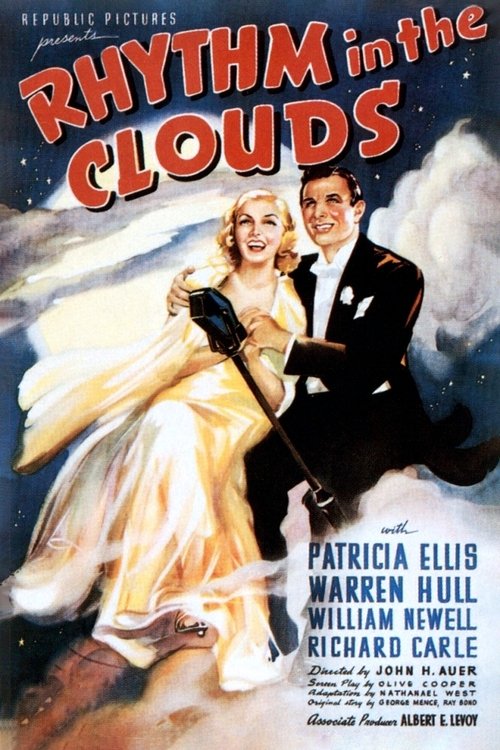
Judy Walker is a poor songwriter who, through mistaken identity, gets her songs played on the radio.
1934
1933
1938
1945
1936
1942
1944
1945
No reviews yet. Be the first to share your thoughts on this movie!
Use the rating form above to leave a star rating and optional review.