Boycott
1930
No user ratings available yet
Representation score: 2.4 out of 10
Representation Score
Fair
1936
Director
Carl Froelich
Runtime
95 minutes
Average Rating
No ratings yetNew Showbiz Analysis
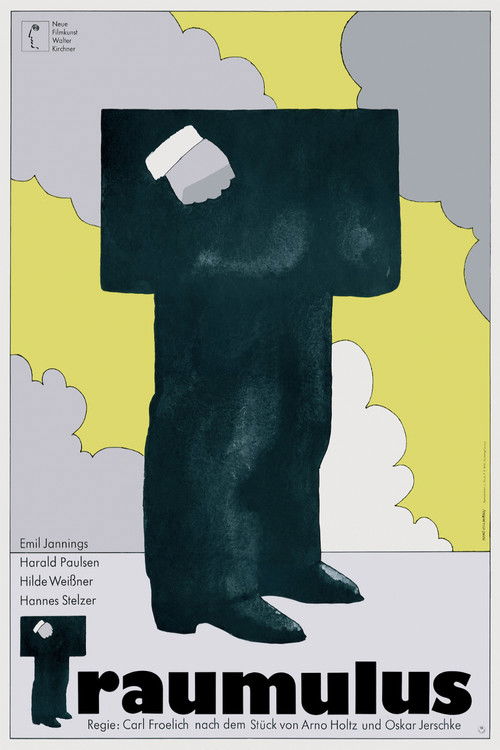
Traumulus serves as a social critique rather than a diverse character study. While it fails to offer broad demographic representation, it successfully challenges the era's dominant social hierarchies through satire. The film's strength lies in its narrative intent to question institutional authority. By portraying the state and its officials as unsympathetic, it moves away from traditional stability toward a more critical perspective. However, the production is limited by its historical context. The lack of racial, ethnic, or LGBTQ+ representation reflects the homogeneous social landscape of 1936 Germany.
Category Breakdown
The film does not explicitly depict LGBTQ+ identities or non-straight relationships. The narrative centers on the protagonist's professional life within a municipal setting.
The story deconstructs traditional masculinity by contrasting a gentle teacher against aggressive, militaristic town officials. It uses satire to portray rigid male authority as obstructive and disconnected.
The cast reflects the homogeneous demographic norms of 1936 Germany. There is no indication of racial diversity or non-white casting within the narrative.
The film provides a sophisticated critique of the Kaiserreich's militaristic and bourgeois ideologies. It prioritizes dismantling established power dynamics and state authority.
There is no evidence regarding the portrayal of physical or neurodivergent characters in this work.
Present on Screen
Limited or Absent
Official Synopsis
This film is a fascinating showcase for Emil Janning's theatrical play. He's a gentle school teacher who believes in his boys and is easily fooled about all things, while the other town officials want him dismissed. Curiously it's very hard to see what the film is exactly aiming for. Disaster strikes and the lax prof proves to be too far removed of the real problems of the world, on the other hand his enemies are shown in the most unsympathetic, satirical way denouncing the militaristic, bourgeois ideology of the Kaiserreich.
1930
1924
1931

1930

1965
1969
1934

1920
No reviews yet. Be the first to share your thoughts on this movie!
Use the rating form above to leave a star rating and optional review.