
Hunt
2018
No user ratings available yet
Representation score: 5.2 out of 10
Representation Score
Fair
1989
Director
Ola Solum
Runtime
138 minutes
Average Rating
No ratings yetNew Showbiz Analysis
The film is centered around individual disillusionment and the rejection of traditional role models. It successfully portrays Lovise Margrete as a woman with significant autonomy and a strong moral compass. However, the film lacks diversity in its cast and does not include explicit LGBTQ+ identities or disabilities. Overall, the film prioritizes psychological depth and moral complexity over broader social representation, focusing on personal growth rather than a wide range of cultural experiences.
Category Breakdown
The film focuses on a romantic relationship between Edevart and Lovise Margrete, which follows traditional heterosexual norms. While the film doesn't explicitly include LGBTQ+ identities, it explores emotional connections outside conventional marriages.
Lovise Margrete is portrayed as an independent sheep farmer who maintains her own moral compass and autonomy. She stands out as a strong female character who isn't defined by her relationships with men.
The production presents a homogeneous cast typical of 1989 Norwegian cinema. There is no evidence of racial blending or non-Anglo-Saxon representation within the localized setting.
The film challenges traditional mentorship and masculine success stories. Edevart's journey involves rejecting established social roles and embracing a more nuanced, subjective morality.
There is no visible evidence regarding the depiction of physical or neurodivergent disabilities in this work.
Present on Screen
Limited or Absent
Official Synopsis
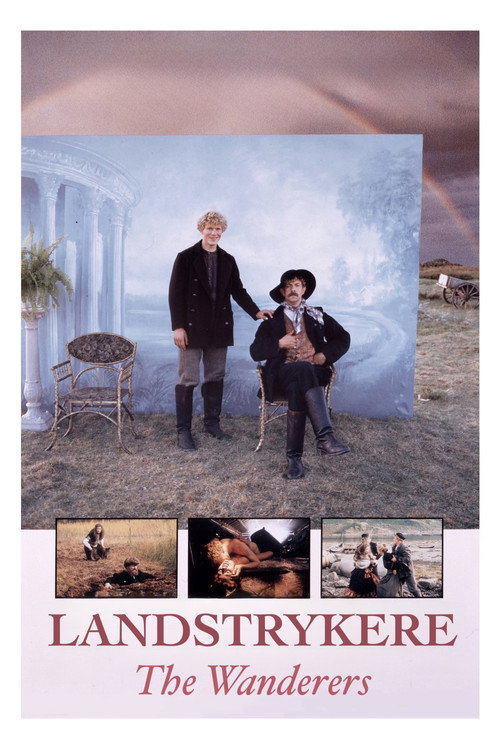
The story concerns Edevart (Trond Peter Stamso Munch), a young man who is learning about life an his place in it. In the story, he at first takes up with August (Helge Jordal), a charming trader who is at least half con-man. After trailing along with him for a while, he decides that August is not a man he wants to model his life after. He becomes acquainted with and falls in love with Lovise Margrete (Marika Lagercrantz) a woman living alone on a sheep farm. She has feelings for him also, but she remains true to her missing husband and their acquaintance does not progress to being a full-fledged romance. It is not until her husband returns to her life that any resolution to Edevart's frustration (which lasts for years) can be achieved.
2018
1964

2009

1970

2020
1987
1983
2004
No reviews yet. Be the first to share your thoughts on this movie!
Use the rating form above to leave a star rating and optional review.