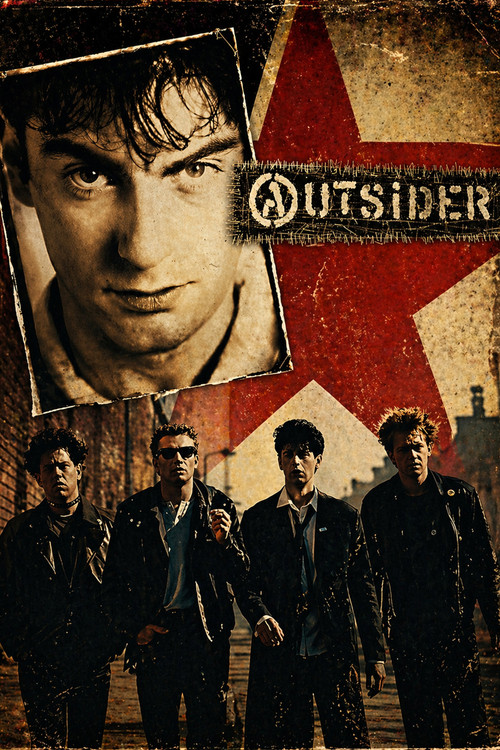
Outsider
1997
No user ratings available yet
Representation score: 5.6 out of 10
Representation Score
Limited
1987
Director
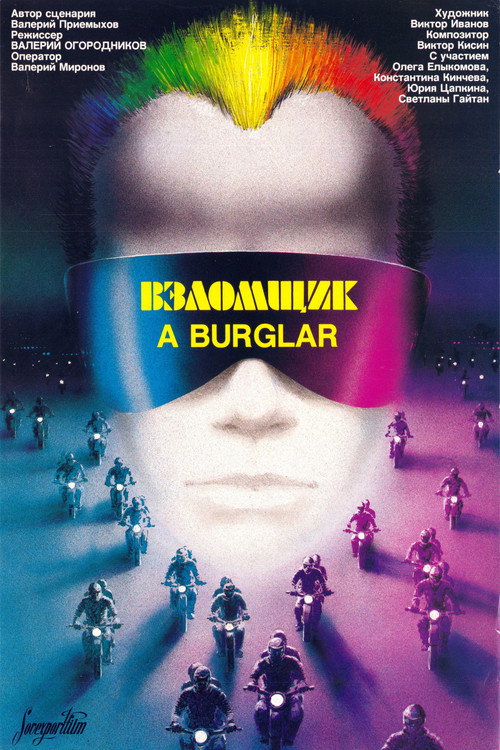
Valeriy Ogorodnikov
Runtime
90 minutes
Average Rating
No ratings yetNew Showbiz Analysis
The Burglar is a gritty exploration of subcultural rebellion and the collapse of traditional family structures. It centers on a child driven to theft due to familial neglect, challenging the moral absolutism typical of state-sanctioned cinema of its time. Though the film lacks modern diversity, it offers a progressive perspective on the 'outsider' status of youth. The punk aesthetic serves as a critique of the societal stability expected in Soviet society. Ultimately, the film excels as a character study of necessity and nihilism, though it remains limited by the homogeneous cultural landscape of its production period.
Category Breakdown
The film focuses on fraternal bonds and youth subcultures without explicitly addressing LGBTQ+ identities. There are no characters who challenge traditional gender norms.
The story centers around a troubled male-dominated household with a negligent father and an aspiring rock musician son. It lacks strong female roles or a challenge to traditional gender roles.
Produced during the Soviet era, the film operates in a culturally homogeneous environment. The narrative emphasizes class and subcultural identity over ethnic or racial diversity.
The film critiques traditional social structures by showing the nuclear family as dysfunctional. It supports youth nihilism and rebellion against established social norms.
There are no visible or invisible disabilities portrayed as central to the character arcs or plot drivers.
Present on Screen
Limited or Absent
Official Synopsis
With a brother dedicated to punk rock stardom at any cost and a drunken father who chases skirt between robotic dancing lessons from the TV, young Senka stands as much chance of nurture as the hero of Truffaut's 400 Blows. The amazing thing about Ogorodnikov's film is that it was made in Russia. Clearly, plenty of Soviet teenies share the nihilistic feelings of their Western counterparts, and the extensive footage of safety-pin chic at concerts perhaps points to a sound export instinct on the director's part. Senka's brother Kostya is under pressure from Howmuch, a very heavy rocker, to steal a synthesiser from the Community Centre, so to protect him Senka steals it himself. The story occupies little more space than the music, but the performances are splendid enough to lodge Senka's predicament in the heart.
1997
1961

1993
1997
2014
2002

1977

2007
No reviews yet. Be the first to share your thoughts on this movie!
Use the rating form above to leave a star rating and optional review.