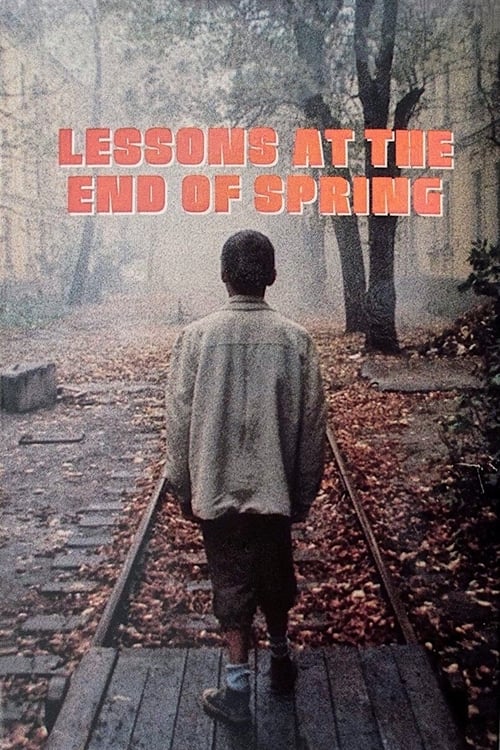
Lessons at the End of Spring
1990
No user ratings available yet
Diversity score: 5.9 out of 10

1986
Director
Sergey Solovyov
Runtime
100 minutes
Average Rating
No ratings yetSynopsis
In a poor provincial town, the ragamuffin boys are frenziedly drilled for combat, and at nights the local elite, gathered in a pool room, boasts of fictitious biographies, while bands of boys amuse themselves with bloody fights on trashy vacant plots… One of the most vivid staples of the postwar childhood were pigeons. They could be bought, sold or stolen. One day a beautiful white dove appeared over the town. Risking his life, Ivan caught the White. And immediately became the target of the "pigeon" mafia…
Overall Score
Fair
Category Breakdown
LGBTQ+ Representation
The film lacks explicit evidence of LGBTQ+ identities or non-heteronormative dynamics. The narrative focuses on social hierarchies and the pursuit of a white dove rather than queer subtext.
Gender Representation
The story centers on a male-dominated ecosystem of ragamuffin boys and local male elites. It depicts a traditional masculine environment defined by combat and physical struggle.
Racial & Ethnic Diversity
Set in a Soviet-era provincial town, the film likely reflects regional demographic homogeneity. Identity is explored through class distinctions rather than racial or ethnic variance.
Religious & Cultural Diversity
The film offers a sophisticated critique of social status and authority. It portrays a fractured world where the elite fabricate biographies to maintain their perceived meritocracy.
Disability Representation
There is no information regarding the inclusion of characters with physical, sensory, or neurodivergent disabilities.
Strengths
Areas for Improvement
AI Analysis
The film prioritizes social class and moral complexity over modern identity-based metrics. It functions as a character-driven study of a provincial town's social stratification. While the narrative achieves sophistication through its critique of institutional stability, it remains limited by a lack of intersectional representation. The focus is heavily weighted toward masculine social structures and class-based conflict. Ultimately, the work explores the tension between individual desire and rigid social hierarchies, using the struggle of marginalized youth to deconstruct local authority.
1990

2018

1987

1962

1989

1965

1987

1992
2010
1973
1980

2012
No reviews yet. Be the first to share your thoughts on this movie!
Use the rating form above to leave a star rating and optional review.