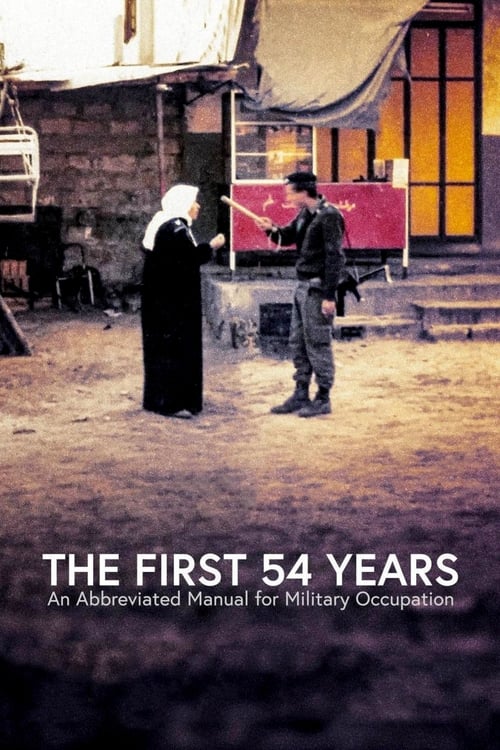
The First 54 Years: An Abbreviated Manual for Military Occupation
2021
No user ratings available yet
Representation score: 7.6 out of 10

Representation Score
Fair
2022
Director
Alon Schwarz
Runtime
95 minutes
Average Rating
No ratings yetNew Showbiz Analysis
Tantura is a powerful examination of historical memory that prioritizes oral history over official state records. By centering Palestinian survivors and the investigative journey of Teddy Katz, the film disrupts conventional national myths through a post-colonial lens. The work achieves high marks for racial and cultural representation by amplifying underrepresented voices and challenging established power dynamics. It treats official truths as constructs to be interrogated, providing a significant role in driving the story to those often dismissed by dominant institutions. However, the film's narrow focus on geopolitical conflict and historical testimony means it lacks representation for LGBTQ+ identities and disability. These omissions, though not central to the film's specific historical mission, limit the breadth of its diversity profile.
Category Breakdown
The documentary does not include any LGBTQ+ characters or stories. It focuses solely on historical testimonies and geopolitical identity.
Gender dynamics are not the main focus of the film. However, the interviewees highlight personal experiences of ability to act while emphasizing the collective experience of displacement and survival.
The film excels by centering Palestinian voices and ancestral connections. It prioritizes the perspectives of a underrepresented ethnic group to challenge dominant national narratives.
The film uses a post-colonial framework to deconstruct founding state narratives. It frames the struggle for land and memory as a conflict between institutional power and communal identity.
There is no specific evidence regarding the representation of visible or invisible disabilities as a central narrative element.
Present on Screen
Limited or Absent
Official Synopsis
When, in the late 1990s, Israeli student Teddy Katz exposed the massacre of Palestinian civilians by Israeli forces in the village of Tantura, in May 1948, during the first Arab-Israeli war, he was initially praised for his pioneering work; but he was soon infamous and branded a traitor. Decades later, incendiary new evidence emerges that corroborates Teddy's findings.
2021

1985

2006
2014

2011
2012

2022
2012
No reviews yet. Be the first to share your thoughts on this movie!
Use the rating form above to leave a star rating and optional review.