My Buddy
1944
No user ratings available yet
Representation score: 0.9 out of 10
Representation Score
Minimal
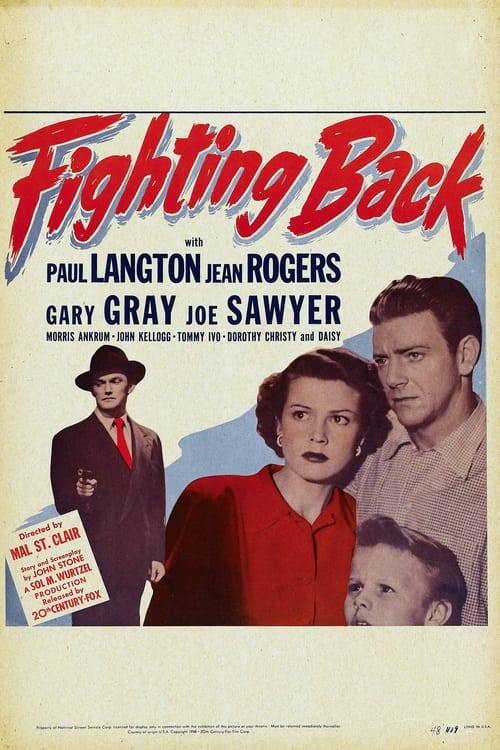
1948
ApprovedDirector
Malcolm St. Clair
Runtime
61 minutes
Average Rating
No ratings yetNew Showbiz Analysis
Fighting Back is a product of the mid-20th-century studio system, emphasizing individual moral struggles over broader social critiques. The narrative centers on a male ex-convict's efforts to reintegrate into post-war industrial society, maintaining traditional social hierarchies. The film adheres to the homogeneous casting and storytelling standards of 1948. It lacks depth in representing diverse identities, focusing instead on a standard crime cliché to uphold conventional social order. Ultimately, the film reinforces the cultural and gender norms of its time without challenging them.
Category Breakdown
The film does not include any characters with non-binary genders or same-sex relationships. It follows a traditional structure focused on straight relationships.
The main character's journey dominates the story, with women playing minor roles. Female characters do not significantly challenge traditional gender roles.
The film reflects the demographics of its time, with a predominantly white cast. There are no non-white characters in significant roles.
The storyline emphasizes traditional civic duties and labor ethics. It upholds established legal and moral norms without questioning them.
There is no mention of characters with visible or invisible disabilities.
Present on Screen
Limited or Absent
Official Synopsis
An ex-convict, freed to fight in World War II, gets a factory job and is accused when a bracelet is missing.
1944
1949
1959

1952
1952
1956
1937
1941
No reviews yet. Be the first to share your thoughts on this movie!
Use the rating form above to leave a star rating and optional review.