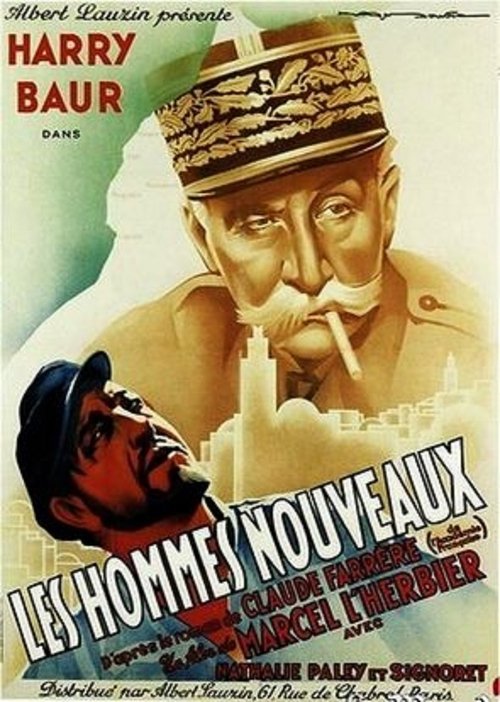
The New Men
1936
No user ratings available yet
Representation score: 4.0 out of 10
No Poster Available
Representation Score
Minimal
1934
ApprovedDirector
Marie Epstein, Jean Benoît-Lévy
Runtime
117 minutes
Average Rating
No ratings yetNew Showbiz Analysis
Itto functions as a historical artifact of 1930s colonialist perspectives. While the film incorporates indigenous language and a Moroccan setting, it ultimately upholds Western hegemony rather than challenging it. The narrative structure reinforces existing power dynamics by suggesting that local tribal loyalty should be subverted to preserve French occupation. This thematic focus results in a lack of ethnic ability to act. Ultimately, the film lacks the moral relativism or anti-colonial critique found in progressive cinema, instead presenting a worldview that validates colonial dominance and traditional gendered clichés.
Category Breakdown
The film follows traditional heterosexual romances, focusing on a relationship between the protagonist and a Moroccan tribesman without any queer narratives.
Itto serves as the emotional center but her role is limited by patriarchal structures. She primarily bridges conflicting political forces.
While featuring the Chleuh language, the story reinforces colonial hierarchies. The plot suggests that betraying one’s culture is acceptable to maintain French colonial stability.
The narrative operates through a lens of colonial jingoism. It prioritizes French institutions and portrays the disruption of local tribal structures as necessary.
There are no visible or invisible disabilities depicted as central to the character arcs or the plot progression.
Present on Screen
Limited or Absent
Official Synopsis
Filmed in French Morocco, Itto's dialogue is spoken primarily in the tribal Chleuh language. The jingoistic story concerns a series of clashes between French occupational forces and a rebellious Chleuh chieftain. Itto (Simone Berriau), chief's daughter, becomes embroiled in a romance with a Moroccan tribesman who has gone over to the French side. It is implied in Itto that it's okay to betray one's own people if it will preserve French colonialism in Africa. To modern viewers, the rampant chauvinism in Itto is a difficult pill to swallow.
1936

1963
1962

2012

1955
1932
1930
2003
No reviews yet. Be the first to share your thoughts on this movie!
Use the rating form above to leave a star rating and optional review.