Find another title
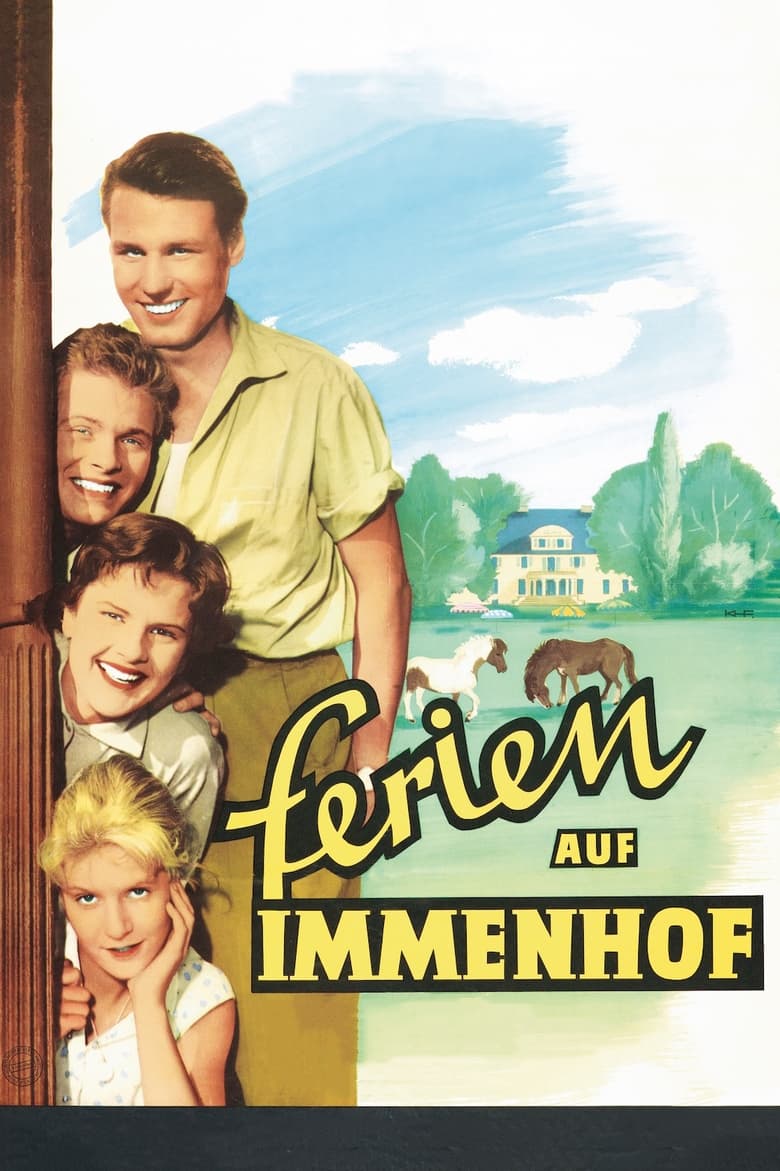
Ferien auf Immenhof
1957
Director
Hermann Leitner
Runtime
94 minutes
Average Rating
No ratings yetSynopsis
The pony hotel has just been opened, but so far no guests have arrived. Dick gets Ralf to design a brochure about the hotel. The girls and Ethelbert then lead the village children on horseback to Lübeck, where they all distribute the brochure - not knowing that Dalli has added some embellishments to the text.
Where to Watch
Diversity & Representation
Overall Score
Minimal
Category Breakdown
LGBTQ+ Representation
The film operates within a strictly heteronormative framework. There is no presence of non-cisnormative identities or same-sex intimacy.
Gender Representation
Female characters manage the pony hotel but remain confined to domestic and caretaking roles. The narrative reinforces traditional mid-century gender hierarchies.
Racial & Ethnic Diversity
The cast is ethnically homogeneous, reflecting the historical constraints of 1957 West German cinema. It lacks any multicultural or non-white characters.
Religious & Cultural Diversity
The story prioritizes traditional Western values like family stability and community cohesion. It focuses on idyllic rural life rather than social critique.
Disability Representation
There are no visible or invisible disabilities portrayed with agency. Characters function within a standard framework of physical capability.
Strengths
- The film successfully portrays a cohesive sense of community and local enterprise through the pony hotel plot.
Areas for Improvement
- The narrative lacks racial and ethnic diversity, presenting an ethnically homogeneous view of rural life.
- Gender roles are strictly traditional, limiting female agency to domestic and caretaking spheres.
- There is a complete absence of LGBTQ+ representation or non-cisnormative identities.
AI Analysis
Ferien auf Immenhof is a quintessential Heimatfilm that functions as a cultural stabilizer. It prioritizes the restoration of social order and traditionalist storytelling over progressive social inquiry. The film adheres to the conservative, restorative traditions of the post-war era. It reinforces established social, gender, and cultural hierarchies rather than disrupting them. Because the narrative focuses on localized, pastoral life, it lacks intersectional complexity and avoids any engagement with multicultural or non-normative dynamics.
Rate this Movie
Reviews
No reviews yet. Be the first to share your thoughts on this movie!
Use the rating form above to leave a star rating and optional review.