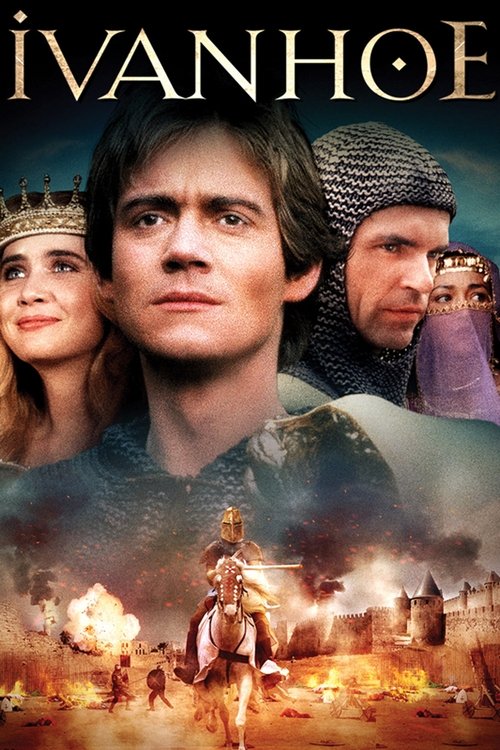
Ivanhoe
1982
No user ratings available yet
Representation score: 1.4 out of 10

Representation Score
Minimal
1985
Director
John Hough
Runtime
93 minutes
Average Rating
No ratings yetNew Showbiz Analysis
Black Arrow is a traditional period adventure that emphasizes historical accuracy and genre clichés over modern diverse representation. The film's focus is on the classic outlaw narrative set during the Wars of the Roses. While the film does not offer meaningful diversity regarding gender, race, or LGBTQ+ identities, it does provide some cultural subversion. The narrative challenges the stability of the feudal aristocracy by framing rebellion as a response to systemic oppression. Overall, since these themes are rooted in classic literary clichés rather than a modern deconstruction of identity politics, the film remains a conventional historical drama.
Category Breakdown
The film does not include any non-binary or LGBTQ+ characters, sticking closely to the assumption that everyone is straight or cisgender.
The story centers around male combatants and outlaws, while female characters play secondary, traditional roles that support the period's social structure.
The cast is primarily Anglo-Saxon, with no actors representing non-Anglo-Saxon backgrounds or race-bent casting.
The story critiques the feudal system by portraying the protagonists as rebels fighting against the nobility, challenging the existing class hierarchy.
There are no characters with visible or invisible disabilities, nor is disability used as a central theme in the narrative.
Present on Screen
Limited or Absent
Official Synopsis
In 15th century England, a civil war called Wars of the Roses is being fought between two rival houses who want the throne. Fresh from battle, a knight finds his family dead. He joins the outlaws led by the Black Arrow (Stephan Chase) to seek justice. The noble Black Arrow foils Sir Brackley's (Oliver Reed) plan to kill one ward (Benedict Taylor) and marry the other. This is a classic story by Robert Louis Stevenson turned into film by Disney pictures.
1982

1952

1948
1985
1995
1975
1950
1997
No reviews yet. Be the first to share your thoughts on this movie!
Use the rating form above to leave a star rating and optional review.