
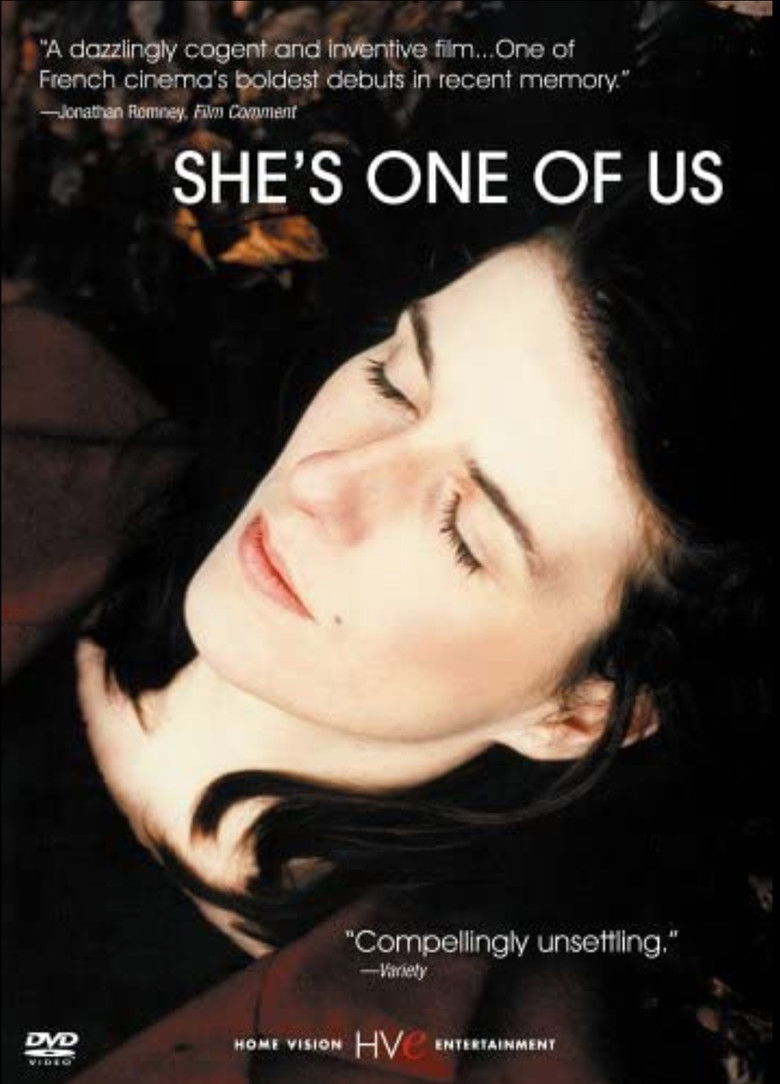
My Sister's Keeper
2002
No user ratings available yet
Diversity score: 3.8 out of 10
2003
Director
Siegrid Alnoy
Runtime
98 minutes
Average Rating
No ratings yetSynopsis
At the start, Christine Blanc is a temp, her boyfriend has gone. Near the story's end, she's been offered a steady job, she has a fiancé, other men seem interested in her, she's passed her driving test, and, after she wins 1000 Euros in a scratch-off, her colleagues sing that she's a jolly good fellow ("one of us"). But something's askew: her gaze is too direct, her eyes open too widely; conversational gambits hit odd notes; she parrots others' words; she cooks too much food when she invites a supervisor to dinner. When the supervisor takes Christine on a spontaneous outing that disorients her, her oddities become something else. Can things ever be normal?
Overall Score
Limited
Category Breakdown
LGBTQ+ Representation
The story centers on Christine’s relationships with a boyfriend and a fiancé. There is no evidence of non-cisnormative identities or critiques of heteronormativity present.
Gender Representation
A female protagonist drives the narrative, moving from precarious work toward stability. While she navigates traditional gendered roles, the focus remains on her internal cognitive experience.
Racial & Ethnic Diversity
The provided information contains no details regarding the racial or ethnic composition of the cast or setting. No assessment of racial agency can be made.
Religious & Cultural Diversity
The film examines the tension between the individual and the collective. It critiques the performative nature of social rituals and Western social institutions through workplace interactions.
Disability Representation
The narrative focuses on neurodivergence, portraying Christine’s social deviations as central plot elements. It frames her struggle for normalcy as a systemic social challenge rather than a personal failing.
Strengths
Areas for Improvement
AI Analysis
The film functions as a character study exploring the friction between neurodivergence and communal expectations. It centers on the 'uncanny' nature of social performance through Christine Blanc's attempts to mimic neurotypical cues. While the film lacks explicit markers for LGBTQ+ or racial diversity, it finds strength in its depiction of invisible disability. The narrative disrupts conventional expectations by centering a protagonist whose agency is defined by her struggle to interpret a world that feels fundamentally askew. Ultimately, the work succeeds in deconstructing social 'normalcy,' though it remains limited by a lack of broader intersectional representation within the available context.
2002
2010

2017
2001
2012
2014
1993

1997
2012

2022
1998

2020
No reviews yet. Be the first to share your thoughts on this movie!
Use the rating form above to leave a star rating and optional review.