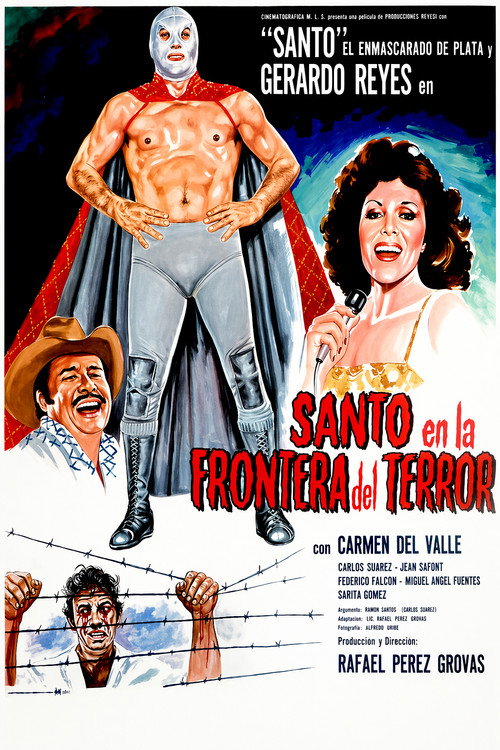
Santo and the Border of Terror
1981
No user ratings available yet
Representation score: 6.1 out of 10
Representation Score
Limited
1982
Director
Rafael Pérez Grovas
Runtime
88 minutes
Average Rating
No ratings yetNew Showbiz Analysis
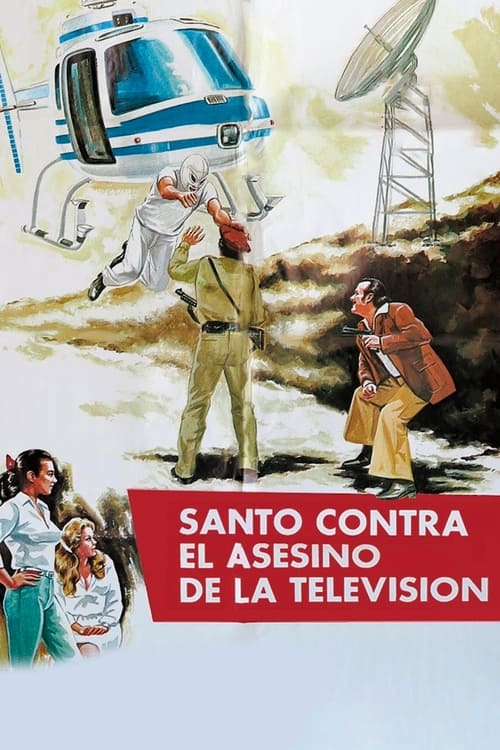
Santo vs. the TV Killer adheres to the established traditions of the Luchador subgenre. It serves as a culturally specific piece of regional entertainment centered around Mexican icons, providing an alternative to Western-centric media of the early 1980s. However, the narrative structure relies heavily on traditional heroic clichés. The story reinforces conventional social hierarchies and masculine archetypes, focusing on a singular hero's struggle against systemic criminal threats. While the film offers a non-Western perspective, it does not significantly challenge established norms. The representation remains largely within the confines of standard action-adventure structures.
Category Breakdown
The film focuses on a traditional hero-villain setup. It emphasizes masculine archetypes without clear representation of LGBTQ+ identities or critiques of the assumption that everyone is straight or cisgender.
The male protagonist holds the primary role. The storyline reinforces traditional views of male leadership and strength through a masculine struggle for control.
As Mexican cinema, the film offers a non-Anglo-Saxon perspective. It centers Mexican cultural icons and linguistic norms, providing a break from homogeneous Western narratives.
The plot revolves around restoring institutional stability and upholding social order. The morality follows a conventional good-versus-evil storyline typical of the adventure genre.
There is no evidence of characters with physical or neurodivergent disabilities being included or portrayed.
Present on Screen
Limited or Absent
Official Synopsis
Santo takes on Magnus, who has taken control of television stations to broadcast kidnappings and other such criminal activity.
1981

1968

1956
1973

1977

1989

1961

1965
No reviews yet. Be the first to share your thoughts on this movie!
Use the rating form above to leave a star rating and optional review.