
Yo maté a Juan Charrasqueado
1949
No user ratings available yet
Representation score: 2.9 out of 10
Representation Score
Minimal
1963
Director
Chano Urueta
Runtime
95 minutes
Average Rating
No ratings yetNew Showbiz Analysis
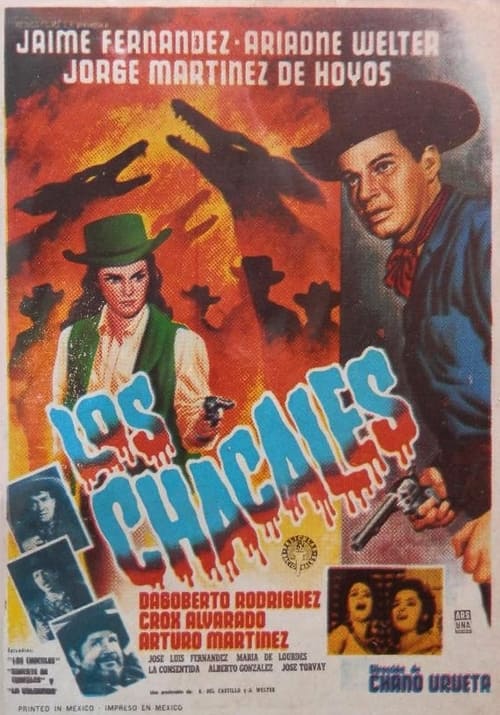
The film opens on the dusty, lawless frontier of the Mexican Revolution, where the camera immediately establishes a world defined by armed men and rugged survival. Chano Urueta’s 1963 drama sells a traditional hero-versus-villain narrative, positioning the "jackals" as chaotic threats to a fragile social order. The visual language is straightforward: Jaime Fernández is framed as the competent, moral center, his weathered masculinity contrasting with the vulnerability of Ariadna Welter, who serves as the prize or moral compass rather than an active agent. The film does not satirize the violence it depicts; it treats the guns and the blood as necessary, brutal facts of life in a borderland setting. The argument is simple and unapologetic: order defeats chaos, and the survivor is the one who restores the status quo. The camera lingers on the male leads, granting them the dignity of the struggle, while the ensemble cast of "jackals" remains a background texture of threat. There is no irony in the final resolution; the death or capture of the antagonists is presented as a moral necessity, not a tragedy. The film’s internal logic is consistent with its period, refusing to complicate the binary of hero and bandit. It is a low-budget, local effort that prioritizes narrative clarity over ideological subversion, ending with a precarious peace that validates the traditional hierarchy of the frontier. The last image is a verdict on the value of stability, rewarding the protagonist’s survival and the reassertion of law over the wild.
Category Breakdown
No queer identities appear. The plot relies on heterosexual pairings and traditional romantic tropes. The narrative excludes same-sex intimacy entirely.
Ariadna Welter serves as the visual prize or moral compass. Jaime Fernández embodies the competent protector, resolving conflict through force. The female lead remains the object of desire.
The cast is predominantly Mexican, reflecting local production norms. No non-white characters are highlighted as distinct from the national majority. The ensemble functions as a uniform social fabric.
The film treats revolutionary violence as a threat to be suppressed. The ending rewards the restoration of fragile social order. It affirms traditional hierarchies of law and survival.
All characters are able-bodied adults. No impairment, disability, or medical condition is depicted. The narrative and visual design exclude disability entirely.
Present on Screen
Limited or Absent
Official Synopsis
Three brothers try to eliminate a man and in the shootout an innocent man is shot to death.
1949
1972
1961
1967
1961
1967
1969
1966
No reviews yet. Be the first to share your thoughts on this movie!
Use the rating form above to leave a star rating and optional review.