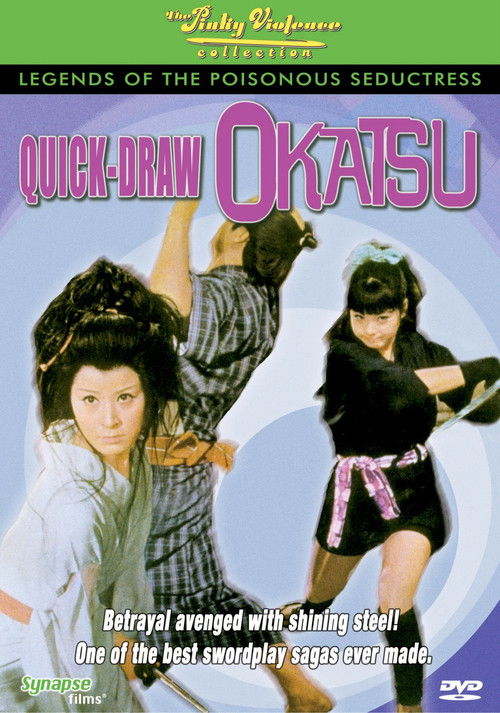
Quick-draw Okatsu
1969
No user ratings available yet
Representation score: 5.1 out of 10
Representation Score
Limited
1969
Director
Nobuo Nakagawa
Runtime
84 minutes
Average Rating
No ratings yetNew Showbiz Analysis
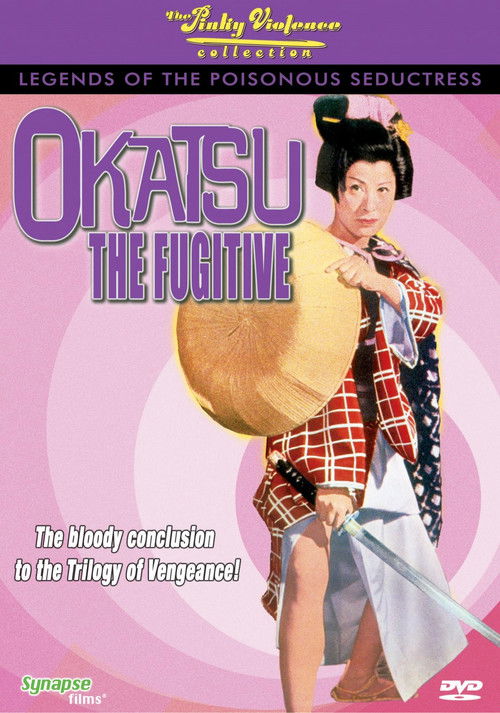
Okatsu the Fugitive stands out for its subversion of gender roles, featuring a combat-skilled woman at the center of a violent crime drama. Her journey from accepting an arranged marriage to becoming a vengeful warrior provides a compelling arc of personal growth. While the film excels in gender representation, it remains culturally homogeneous, reflecting its specific historical Japanese setting. The narrative's strength lies in its critique of systemic corruption and the failure of communal protections. Overall, the film offers a nuanced look at power dynamics, though it lacks diversity in terms of LGBTQ+ identities or disability representation.
Category Breakdown
The film focuses on traditional family and romantic relationships. It does not include any non-straight or non-cisgender identities or stories.
The movie centers around a female protagonist who is skilled in sword fighting. She transforms from a passive character into an active agent seeking revenge.
Set in a historical Japanese context, the film features a culturally uniform cast. While it avoids a Western perspective, it does not actively challenge ethnic norms.
The story criticizes systemic corruption and predatory economic practices like tobacco smuggling. It supports the protagonist's transition to vigilantism due to institutional failures.
There is no mention of characters with physical or neurodivergent disabilities in the story.
Present on Screen
Limited or Absent
Official Synopsis
Okatsu the Fugitive is the third film in the "Ohyaku/Okatsu" series. Okatsu; a "tomboy" who is good with a sword. Her father has found her a man to marry and actually she doesn't seem too upset about the situation. At the same time, a bunch of farmers are being slaughtered by a corrupt group running a tobacco smuggling ring. They're being investigated by a man who is documenting their crimes and when they find out about it, they torture him for information but get none. It's not long before he and Okatsu's mother wind up dead and she sets out for revenge.
1969

1973
1981

1967
1966

1967

1961
1990
No reviews yet. Be the first to share your thoughts on this movie!
Use the rating form above to leave a star rating and optional review.