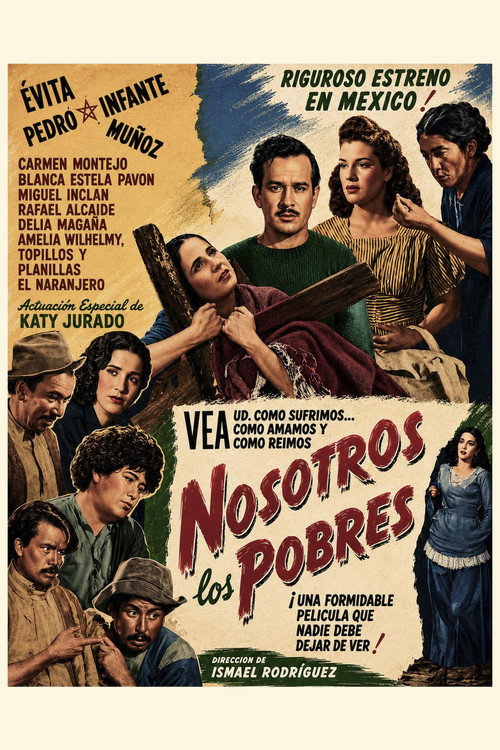
We the Poor
1948
No user ratings available yet
Representation score: 4.2 out of 10
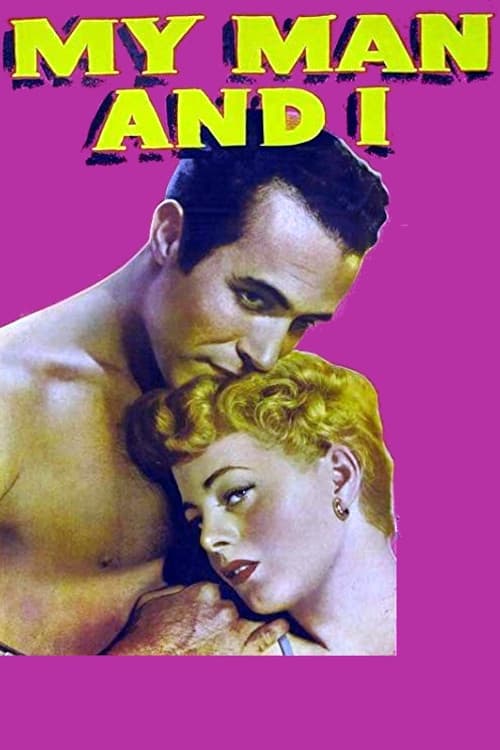
Representation Score
Limited
1952
NRDirector
William A. Wellman
Runtime
99 minutes
Average Rating
No ratings yetNew Showbiz Analysis
My Man and I is a mid-century drama that explores social tensions. By focusing on a Mexican-American laborer, the film goes beyond typical background roles to examine systemic injustices and racial conflicts. While the film does not include LGBTQ+ representation or multi-layered complexity, it challenges the era's homogeneity. The narrative centers on the power dynamics between an ethnic minority and a corrupt, racist employer. Ultimately, the film uses economic exploitation to highlight the vulnerabilities of underrepresented individuals within the legal and social systems of the time.
Category Breakdown
The film follows the conventions typical of 1952 cinema, with no visible LGBTQ+ characters or stories that challenge the assumption that everyone is straight or cisgender.
The story revolves around a male laborer and his conflict with a male landowner. Women play a supporting role rather than being central to the main storyline.
The film features a Mexican-American protagonist and highlights their central role. It breaks away from the era's casting norms by giving a person of color a prominent position.
The story addresses themes of class struggle and the exploitation of workers. It criticizes local corruption through a plot involving a racist farmer and financial dishonesty.
There are no characters with visible or invisible disabilities in the film.
Present on Screen
Limited or Absent
Official Synopsis
In California, a Mexican-American laborer is falsely accused of shooting the racist farmer he was working for after the farmer stiffed him with a bad check.
1948
1950
1951
1954
1969
1940

1951
1949
No reviews yet. Be the first to share your thoughts on this movie!
Use the rating form above to leave a star rating and optional review.