The Secret of the Blue Room
1932
No user ratings available yet
Representation score: 1.1 out of 10
Representation Score
Limited
1934
PassedDirector
Roy William Neill
Runtime
65 minutes
Average Rating
No ratings yetNew Showbiz Analysis
The film primarily serves as a genre-driven mystery that prioritizes tension over broad demographic representation. While it lacks diverse casting, it challenges traditional social structures by grouping various social classes and moral identities in a confined space. However, its adherence to heterosexual norms and a homogeneous cast limits its overall representational impact. Ultimately, the film reflects the era's social norms, focusing on a narrow social circle while exploring moral relativism through the horror genre.
Category Breakdown
The film follows the heterosexual norms of 1934, focusing on traditional romantic relationships like those between Henry Abbott and Jean Trent.
Professional women such as attorney Sylvia Inglesby and socialite Margaret Chisholl play influential roles. Female characters are placed on an equal footing with men in a life-or-death game of wits.
The cast centers around Anglo-Saxon social types, with no significant non-white characters or race-bent casting.
The story challenges moral hierarchies by grouping a mob boss, a campus radical, and a District Attorney together, creating a cynical view of societal authority.
The film does not depict characters with visible or invisible disabilities, nor does it include neurodivergence or chronic illness as narrative devices.
Present on Screen
Limited or Absent
Official Synopsis
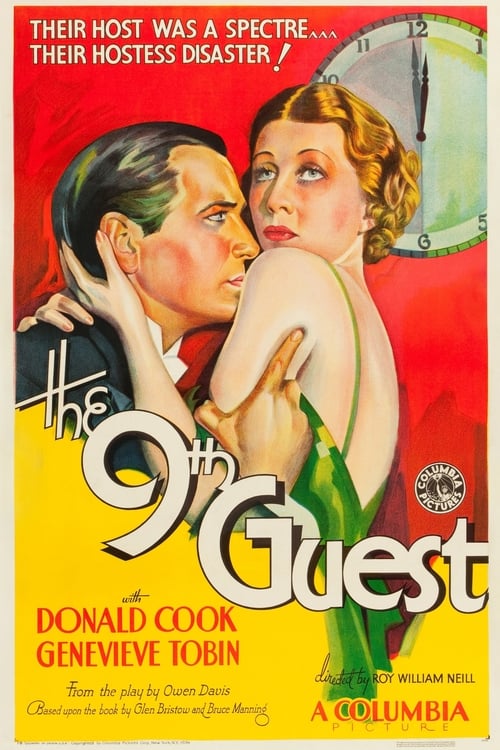
Eight people are invited by an unsigned telegram to a penthouse apartment, where they find themselves locked in and greeted by their unknown host's voice via the radio, who explains that before the night is over each one will be die unless they manage to outwit the ninth guest, Death.
1932

1959

1928

1945

1974

1933
1939

1973
No reviews yet. Be the first to share your thoughts on this movie!
Use the rating form above to leave a star rating and optional review.