
Night of Adventure
2014
No user ratings available yet
Representation score: 3.7 out of 10
Representation Score
Limited
2014
Director
Nhật Cường, Lý Hải
Runtime
92 minutes
Average Rating
No ratings yetNew Showbiz Analysis
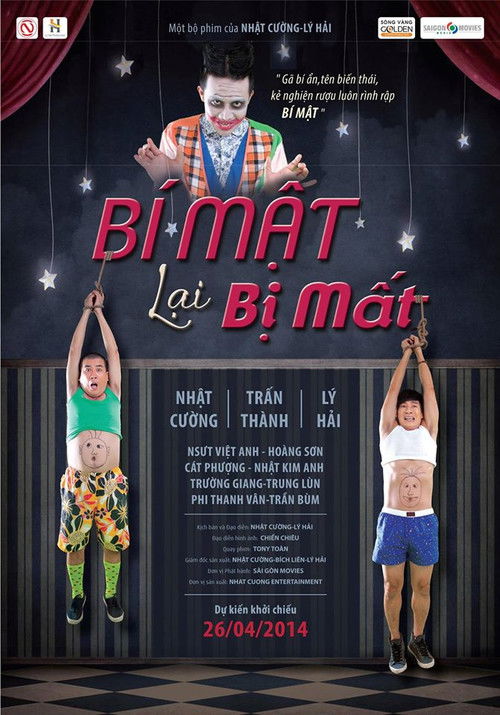
Bí Mật Lại Bị Mất functions as a typical commercial comedy that prioritizes mainstream entertainment over social disruption. The film relies on traditional narrative structures and social hierarchies common to the genre. While it effectively captures a specific cultural context, it lacks the depth needed to engage with complex multi-layered identities. Representation remains largely conventional and predictable. Ultimately, the film reinforces existing social norms without challenging them through diverse or subversive storytelling.
Category Breakdown
The film does not include visible LGBTQ+ identities or narratives. It does not challenge the assumption that everyone is straight or cisgender.
Female characters play important roles in the film but tend to fit traditional gender roles. They do not challenge gendered power structures or show intellectual superiority over men.
The cast is primarily Vietnamese, with a homogeneous ethnic profile. The film does not explore broader themes related to different aspects of identity.
The film upholds traditional Southeast Asian social values and family structures. It does not explore secularist or subversive themes.
The film does not feature characters with visible or invisible disabilities as central narrative drivers or plot devices.
Present on Screen
Limited or Absent
2014

2017

1999

2024

2014

2009

2014

1999
No reviews yet. Be the first to share your thoughts on this movie!
Use the rating form above to leave a star rating and optional review.