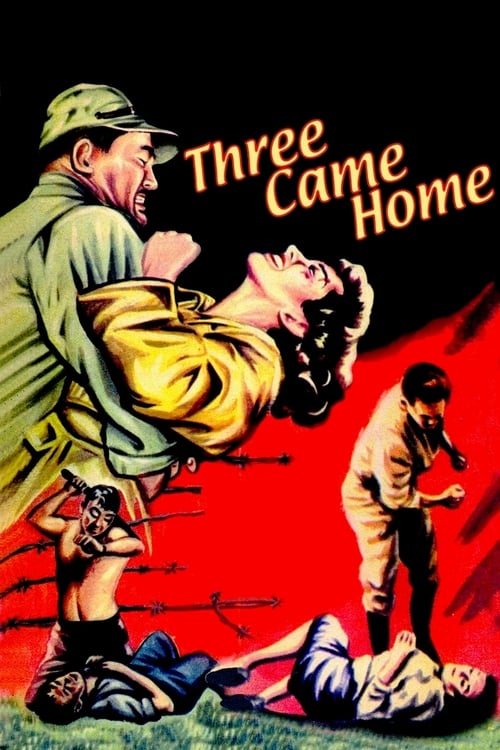
Three Came Home
1950
No user ratings available yet
Representation score: 1.1 out of 10

Representation Score
Good
1961
Director
Nagisa Ōshima
Runtime
105 minutes
Average Rating
No ratings yetNew Showbiz Analysis
Nagisa Ōshima’s film deconstructs social hierarchies and moral certainties in post-war Japan. By featuring a Black American pilot, the film uses racial tension to critique local social structures and the instability of the era. The film excels in its cultural critique, avoiding simple clichés and using systemic ambiguity to explore how individuals navigate a changing society. While it disrupts traditional narratives and examines social order, it lacks explicit LGBTQ+ representation and does not focus on physical or neurodivergent disabilities.
Category Breakdown
The film does not explicitly include LGBTQ+ identities or stories involving non-cisgender relationships. However, it explores themes of unconventional intimacy and power dynamics, which remain subtle rather than clearly defined.
The film challenges traditional gender roles by focusing on the psychological battles between male and female characters. It highlights the shifting roles and empowerment of women, presenting them as active participants rather than passive figures.
A Black American pilot is a central character, breaking the homogeneity typical of the time. His role allows the film to explore the intersection of race, profession, and human nature within a rural Japanese context.
The film critiques traditional institutions by emphasizing moral relativism over established norms. It portrays the collapse of social order and the instability of both Japanese and Western structures.
The film does not prominently feature physical or neurodivergent disabilities as central narrative elements.
Present on Screen
Limited or Absent
Official Synopsis
Towards the end of WWII, a black American pilot is captured and imprisoned by rural Japanese villagers, who await official instructions as to how to proceed with their 'catch'.
1950
1956

1967
1968

1984
1959
1953

1997
No reviews yet. Be the first to share your thoughts on this movie!
Use the rating form above to leave a star rating and optional review.