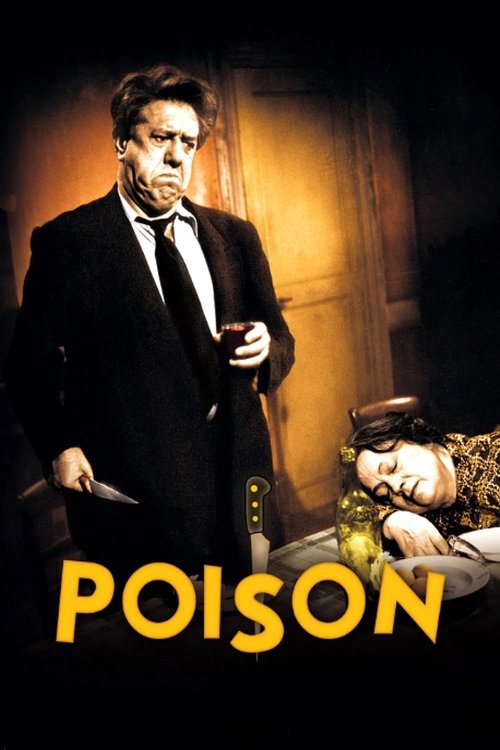
Poison
1951
No user ratings available yet
Representation score: 2.4 out of 10
Representation Score
Limited
1967
Director
Oldřich Lipský
Runtime
71 minutes
Average Rating
No ratings yetNew Showbiz Analysis
Oldřich Lipský’s film is a masterful example of postmodern narrative experimentation. It uses a reverse-chronological structure to challenge traditional storytelling norms and questions conventional morality through dark, surrealist humor. However, the film adheres to the demographic and social norms of 1960s Central Europe. While it disrupts traditional storytelling, it does not explore multiple layers of identity. Ultimately, the film excels in its cinematic craftsmanship and deconstruction of conventional storytelling norms, while maintaining a traditional approach to social representation.
Category Breakdown
The film follows the style of 1960s European farce, focusing on romantic entanglements and slapstick humor without addressing non-straight or non-cisgender identities. It does not include explicit critiques of the assumption that everyone is straight or cisgender.
The characters follow traditional comedic gender roles and misunderstandings. Female characters play minor roles and do not have much control over their own lives or the story's direction.
The film shows a localized, homogeneous society typical of 1960s Czechoslovakia. It lacks a diverse cast or the use of metaphors to represent different racial backgrounds.
The reverse-chronological structure explores moral relativism, challenging traditional storytelling by framing death as a rebirth rather than an end.
The film uses physical slapstick humor but does not feature characters with disabilities as plot devices. Specific character data on disabilities is missing.
Present on Screen
Limited or Absent
Official Synopsis
A dark comedy about a murder and its consequences presented in a backwards manner, where death is actually a rebirth. The film starts with an "execution" of the main protagonist and goes back to explore his previous actions and motivations.
1951
1968

1963
1955

1979
1990

2015

1966
No reviews yet. Be the first to share your thoughts on this movie!
Use the rating form above to leave a star rating and optional review.