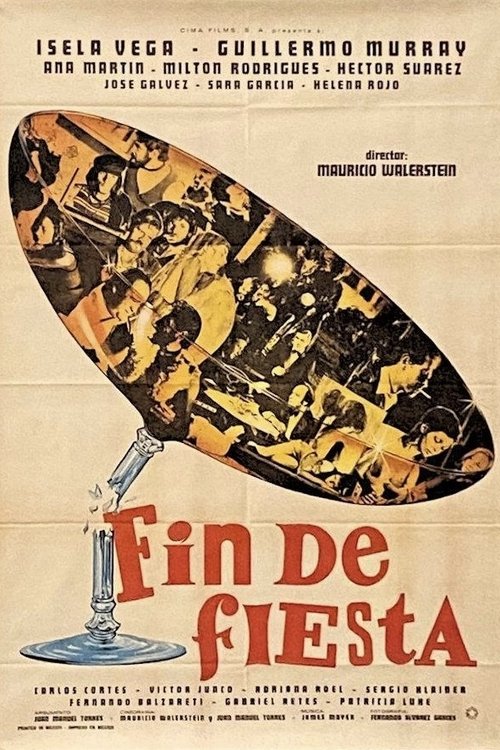
End of the Party
1972
No user ratings available yet
Representation score: 3.8 out of 10

Representation Score
Limited
1970
RDirector
Georges Lautner
Runtime
96 minutes
Average Rating
No ratings yetNew Showbiz Analysis
Road to Salina is a character study of isolation set against a Moroccan desert. While it effectively deconstructs social ties and explores existentialism through a nomadic perspective, it remains tied to the era's conventional casting practices. The film's main limitation lies in its Eurocentric focus. Placing European protagonists in a North African setting without giving indigenous characters more depth creates a disconnect between the environment and the characters. Overall, the work provides a subtle critique of institutional frameworks but does not offer multi-layered depth or challenge established gender hierarchies.
Category Breakdown
The film does not include any identifiable LGBTQ+ characters. Relationships focus primarily on traditional romantic and family bonds.
The story revolves around a strong, stoic male protagonist. Female characters bring emotional depth but the power dynamics adhere to traditional roles of rugged independence versus domesticity.
Despite the North African setting, the cast is mostly white and European. The Moroccan landscape serves as a backdrop without highlighting indigenous or diverse ethnic perspectives.
The narrative emphasizes self-reliance and moral relativism over organized social structures. It examines characters living outside conventional society, questioning the need for traditional Western institutions.
There are no prominent depictions of physical or neurodivergent disabilities among the characters.
Present on Screen
Limited or Absent
Official Synopsis
Jonas, a young drifter, is wandering in a deserted area on the road to Salina, Mexico. He stops at a desolate roadside service station when Mara, the owner, identifies him as her son Rocky, who disappeared four years ago. Feeling sorry for Mara, he decides to stay on and meets Mara's friend Warren and Rocky's sister Billie, but dark facts are to be revealed about the disappearance of Rocky.
1972

1969
1969

1975
1976

1955

1977

1964
No reviews yet. Be the first to share your thoughts on this movie!
Use the rating form above to leave a star rating and optional review.