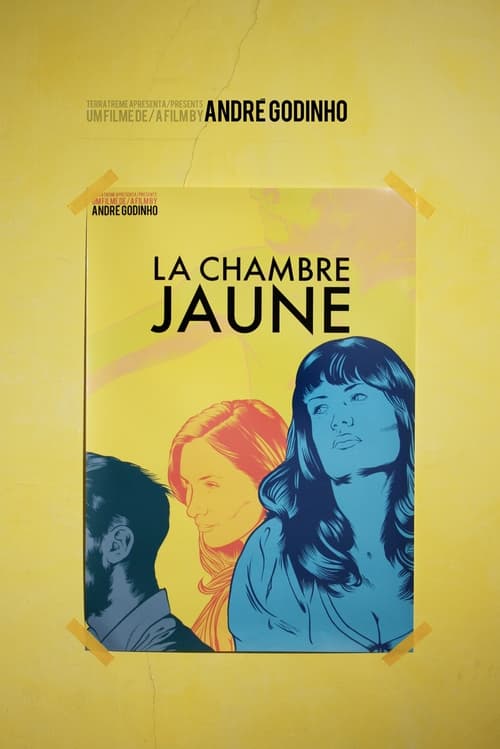
La chambre jaune
2012
No user ratings available yet
Representation score: 0.0 out of 10

Representation Score
Fair
2014
Director
Roberto Castón
Runtime
91 minutes
Average Rating
No ratings yetNew Showbiz Analysis
Roberto Castón’s film is a formalist experiment that prioritizes the mechanics of filmmaking over social advocacy. By focusing on the transition from script to screen, the movie functions as a philosophical examination of the 'great optical illusion' of cinema. The work lacks explicit engagement with identity politics or specific character-driven social dynamics. Instead, it uses a meta-narrative structure to deconstruct how stories are constructed, moving the focus away from traditional representation toward a study of the medium itself. Ultimately, the film's diversity is defined by its intellectual subjectivity. It challenges singular perspectives through a postmodern lens rather than through overt depictions of diverse social groups.
Category Breakdown
The film does not specifically address LGBTQ+ identities. Since the focus is on the technical aspects of script development, there are no explicit queer narratives.
The story focuses on the professional hierarchy within a film set. Although the deconstruction of performance may challenge traditional roles, specific gender-related character arcs are not explored.
The film presents a character study of a professional ensemble. There is no confirmed evidence of specific racial intersections or intentional subversion of traditional casting hierarchies.
The film adopts a secular, postmodern approach by framing cinema as a 'visual lie.' It emphasizes the analytical process of storytelling over traditional or moralistic cultural narratives.
There is no evidence that disability or neurodivergence plays a central role or serves as a plot device within this meta-cinematic exploration.
Present on Screen
Limited or Absent
Official Synopsis
A group of movie professionals go into a studio to, over a single day, read / test/ count / live the story of 'The Silly Ones and The Stupid Ones'. Sitting around a table and following the directions of the director, the actors show us the evolution of the creating process and how the characters through the trials, indications, lighting or props, that at first were just a story captured on a script becomes a film, in cinema, the great optical illusion, the visual lies that allows us to enjoy the stories we see on the screen.
2012

2011
1970
1984
1973
2024
2017
1995
No reviews yet. Be the first to share your thoughts on this movie!
Use the rating form above to leave a star rating and optional review.