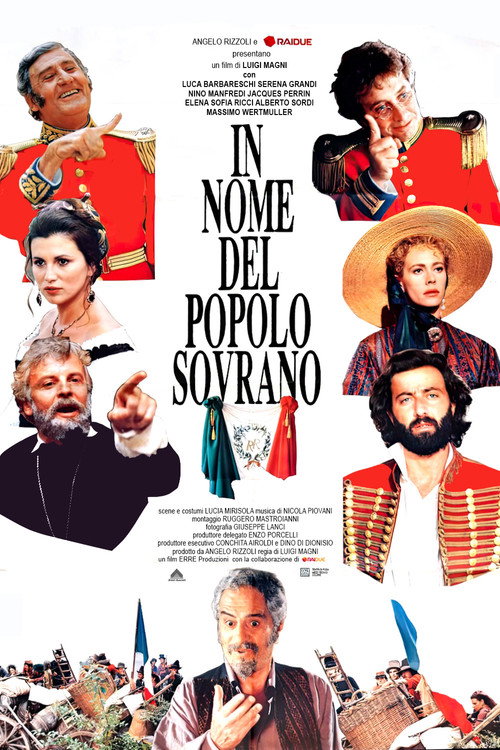
In nome del popolo sovrano
1990
No user ratings available yet
Representation score: 4.2 out of 10

Representation Score
Fair
1989
Director
Luigi Magni
Runtime
95 minutes
Average Rating
No ratings yetNew Showbiz Analysis
Luigi Magni's historical drama uses the Italian unification to question the stability and morality of traditional institutions. By shifting political power and critiquing religious and state authority, the film explores deeper themes. Its narrative structure effectively transfers political will from the deposed king to the active Queen.
Category Breakdown
The film doesn't focus on LGBTQ+ identities or same-sex relationships. However, Queen Maria Sofia's use of masculine clothing to navigate politics challenges the expected gender norms of the time.
The story shifts the political power from the male ruler to the female protagonist. Queen Maria Sofia's active role challenges the stereotype of the passive female consort.
The casting reflects the 19th-century Italian population during the unification movement. The film highlights regional and socioeconomic differences rather than focusing on racial diversity.
The film provides a nuanced look at the Catholic Church's influence. It contrasts strict religious doctrine with the practical needs of the displaced and poor.
There are no significant portrayals of physical or cognitive disabilities used as central plot devices.
Present on Screen
Limited or Absent
Official Synopsis
One of the key factors in Italian unification was the overthrow in 1860 of Francesco, the King of Naples and the two Sicilies, who went into elegant but impoverished exile in Rome with his Queen, Maria Sofia. This seriocomic drama follows the deposed royals as they adapt to their new lives. The former king has recognized the political finality of his deposition, but his queen has taken to traveling in men's clothing all over Italy trying to foment an uprising to restore them to the throne. She is also frantic to have a baby, an heir, but the king has become celibate as a kind of homage to his beloved mother; he spends all his time lobbying the Vatican to get her declared a saint.
1990
1934
1999

1957
1977

1971
2014
1969
No reviews yet. Be the first to share your thoughts on this movie!
Use the rating form above to leave a star rating and optional review.