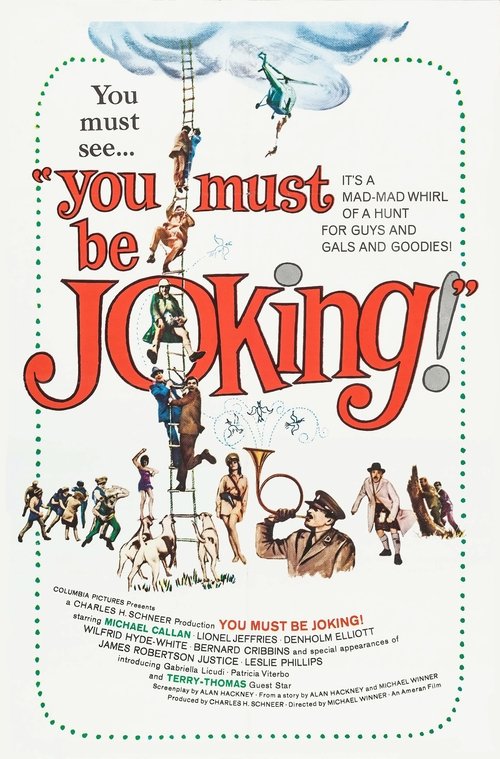
You Must Be Joking
1965
No user ratings available yet
Representation score: 1.4 out of 10
Representation Score
Minimal
1990
PG-13Director
Michael Winner
Runtime
95 minutes
Average Rating
No ratings yetNew Showbiz Analysis
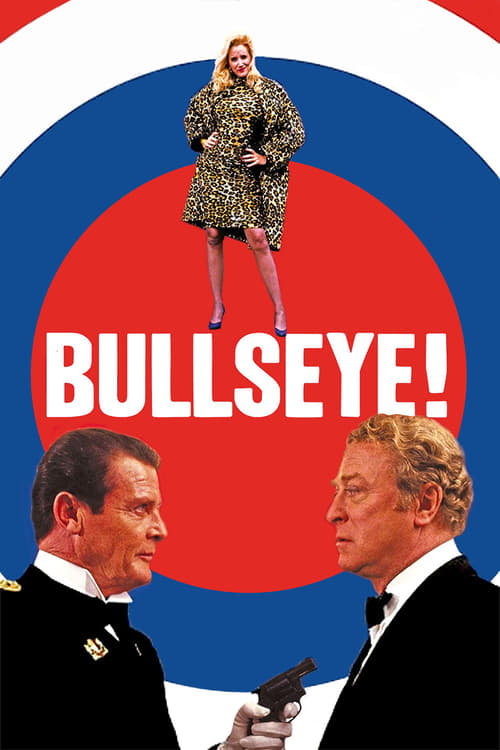
Bullseye! operates as a conventional, genre-driven comedy centered on espionage and situational irony. The plot follows two British con men posing as scientists to sell fraudulent technology, a premise that prioritizes comedic deception over social commentary. The film relies heavily on established clichés of the era, focusing on a homogeneous cast and traditional power dynamics. It lacks the complexity or identity-based storytelling required to disrupt social hierarchies. Ultimately, the production reflects a traditional filmmaking pedigree that favors standard narrative structures rather than progressive or subversive themes.
Category Breakdown
The film does not include any LGBTQ+ characters or perspectives that challenge the assumption that everyone is straight or cisgender. The story revolves around standard comedic scenarios involving deception, without exploring queer viewpoints.
The story centers on male protagonists involved in a con. There is no indication of female characters challenging traditional gender hierarchies or taking on intellect-based roles.
The narrative focuses on British con men, suggesting a homogeneous Western cast. There is no evidence of diverse casting or non-white protagonists driving the plot.
The plot functions within a standard Western framework of espionage and crime. It relies on traditional clichés of greed rather than offering cultural or anti-Western critiques.
There is no information available regarding the portrayal of characters with physical or neurodivergent disabilities within the film.
Present on Screen
Limited or Absent
Official Synopsis
Spies force two British con men to pose as look-alike scientists peddling cheap-energy fusion.
1965
1972
1988
1984
2002

1985
1954

1993
No reviews yet. Be the first to share your thoughts on this movie!
Use the rating form above to leave a star rating and optional review.