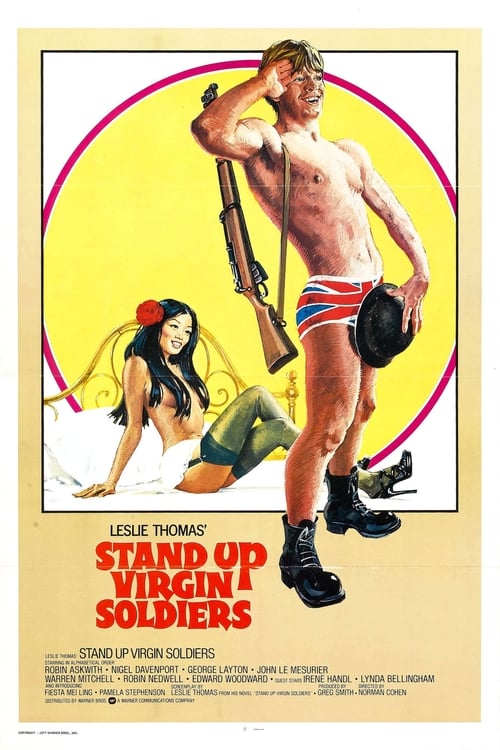
Stand up, Virgin Soldiers
1977
No user ratings available yet
Representation score: 1.8 out of 10
Representation Score
Minimal
1965
NRDirector
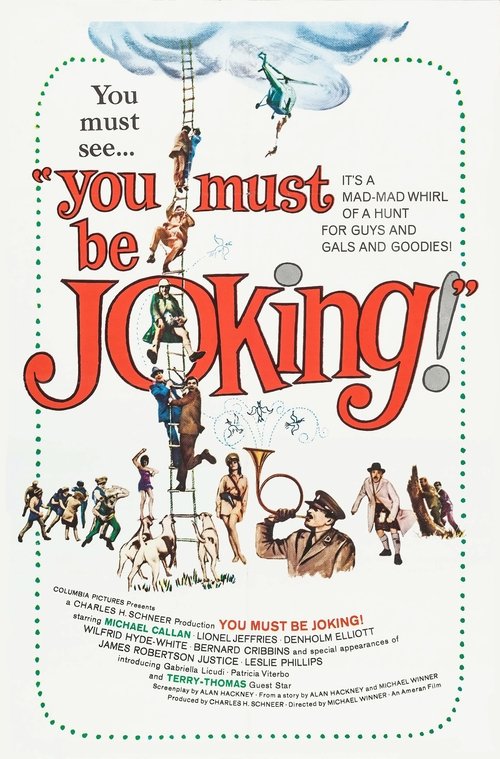
Michael Winner
Runtime
95 minutes
Average Rating
No ratings yetNew Showbiz Analysis
You Must Be Joking is a standard British farce that functions within the social norms of 1965. The film relies on traditional comedic clichés and a homogeneous cast, offering a non-subversive approach to storytelling. The narrative structure does not seek to disrupt established social or identity-based hierarchies. Instead, it leans into the situational chaos of traditional social settings and conventional character dynamics. Ultimately, the film lacks the systemic deconstruction or multi-layered storytelling found in more progressive works, remaining firmly within the social norms of the time.
Category Breakdown
The film adheres to the conventions of mid-1960s British cinema, lacking any queer visibility or same-sex intimacy.
The narrative is heavily male-centric, reinforcing conventional gender roles through its comedic ensemble rather than challenging them.
The cast is relatively homogeneous, reflecting the social constraints of the era without significant racial or ethnic diversity.
The film operates within a traditional Western framework, focusing on middle-class social structures without engaging in anti-Western critiques.
While the film uses slapstick and physical comedy, there is no evidence of characters with disabilities being central agents or subjects of mockery.
Present on Screen
Limited or Absent
Official Synopsis
A motley group of soldiers are set loose on swinging England in an initiative test to collect a selection of esoteric items.
1977
1969
1958

1964
1973
1960
1958
1959
No reviews yet. Be the first to share your thoughts on this movie!
Use the rating form above to leave a star rating and optional review.